Designing with the Game in Mind
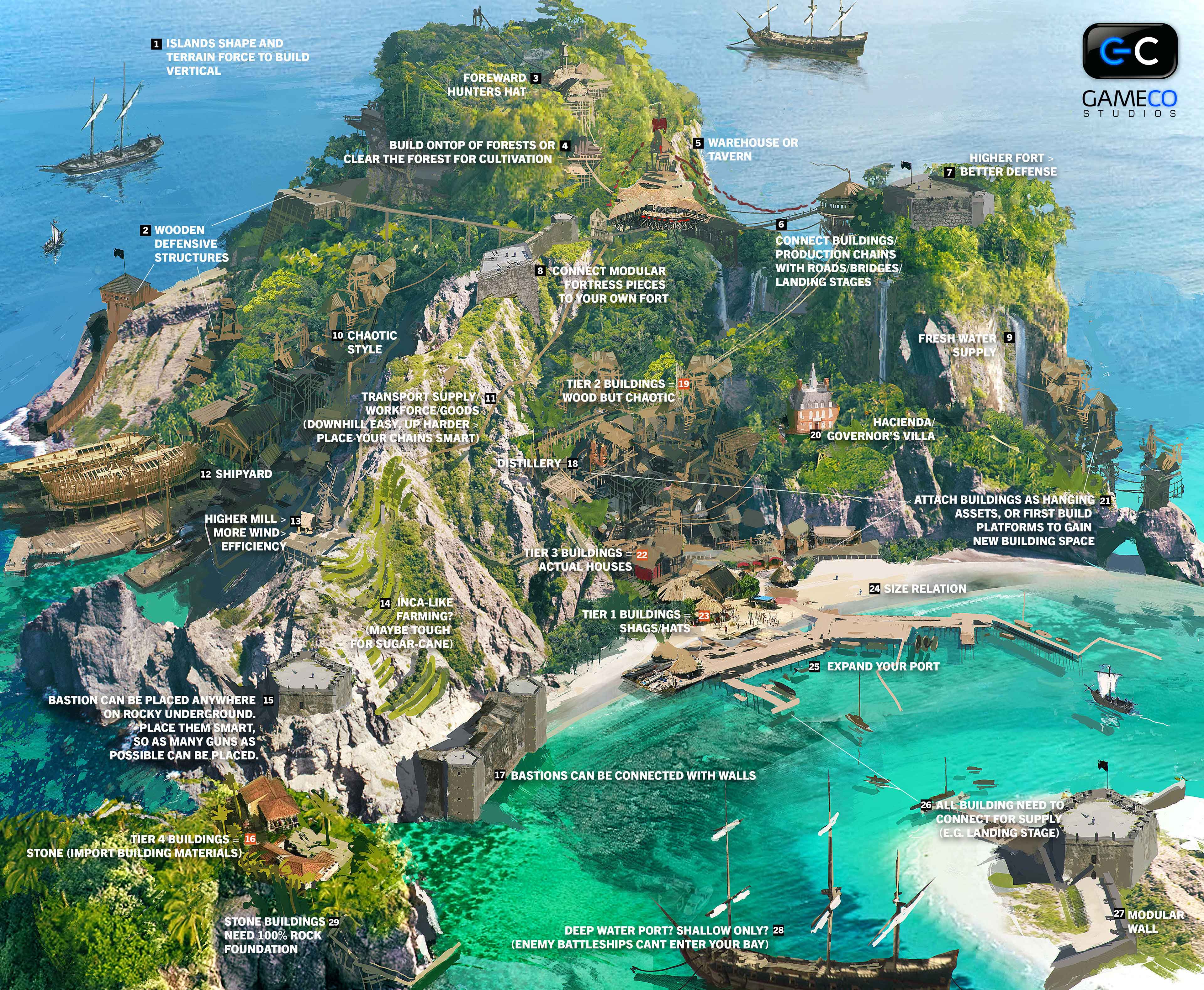
My approach to concept design is to never lose sight of the game itself. That’s why I couldn’t resist contributing a few ideas for the gameplay.
At this early stage of development, anything goes. Countless ideas are swirling around in my head and are brought to life through infographics, mood boards, or quick photobashes.
What’s more, this process is important for me in getting to grips with the subject matter.
Keyart Breakdown
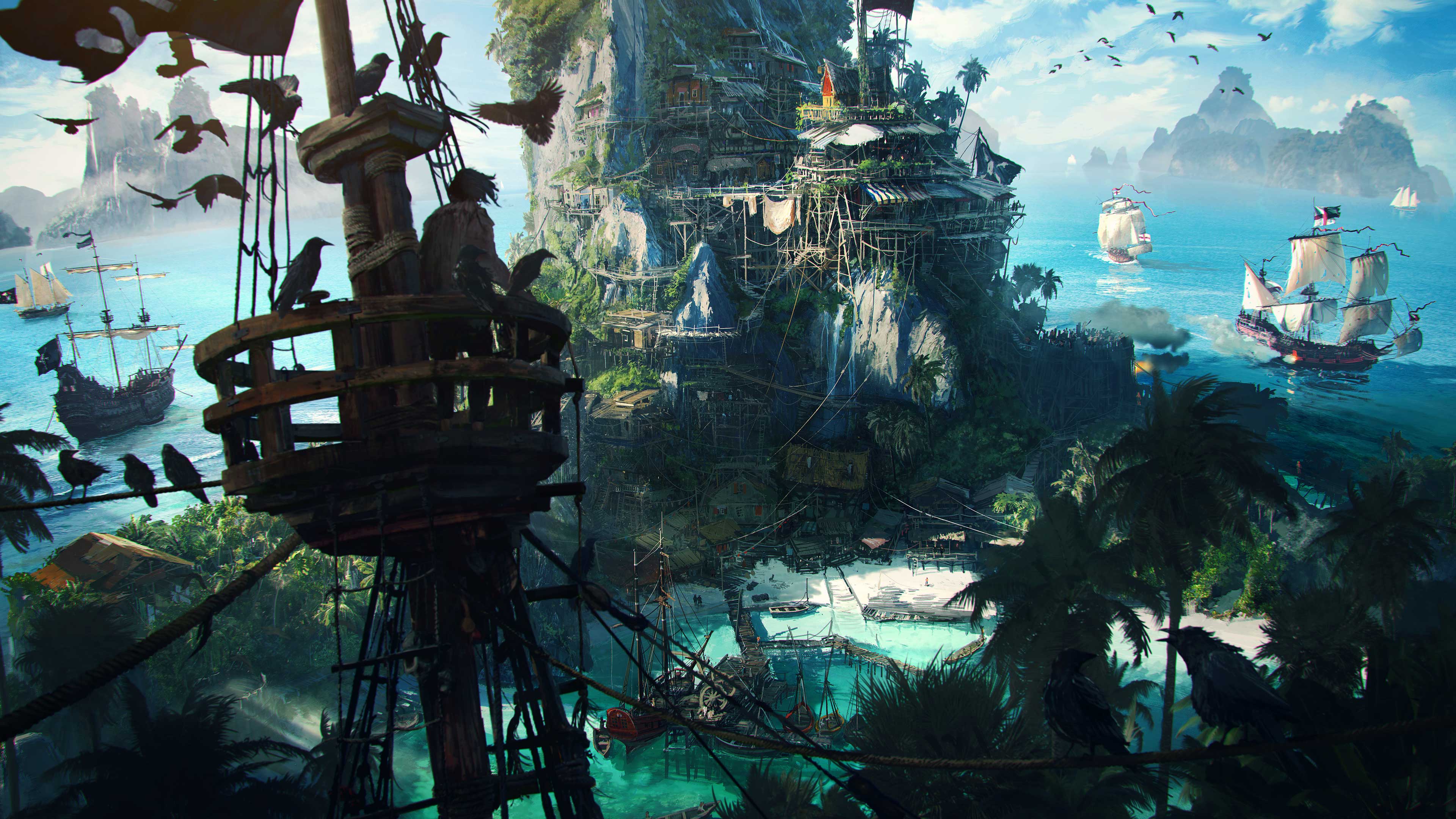
I’m jumping ahead a bit here. This key art was created towards the end of the project, but it’s simply lovely to look at, so I decided to feature it first.
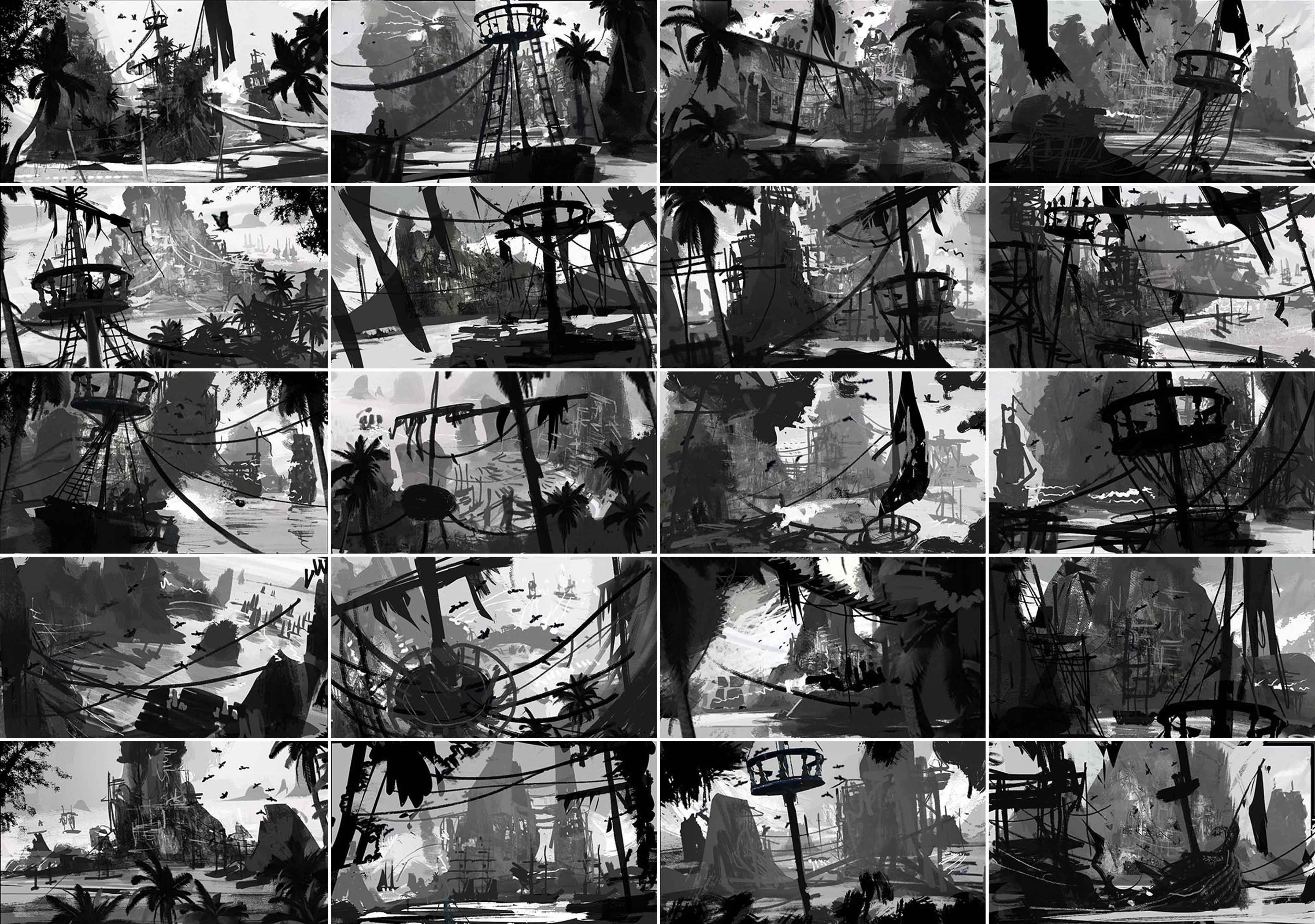
We started by creating a few thumbnail sketches, each of which, of course, tells a different story. As well as depicting the city-building aspect, it was important to include a crow’s nest and ships in battle (an attack on the island?).
We decided to go ahead with the version in the second row on the far left.
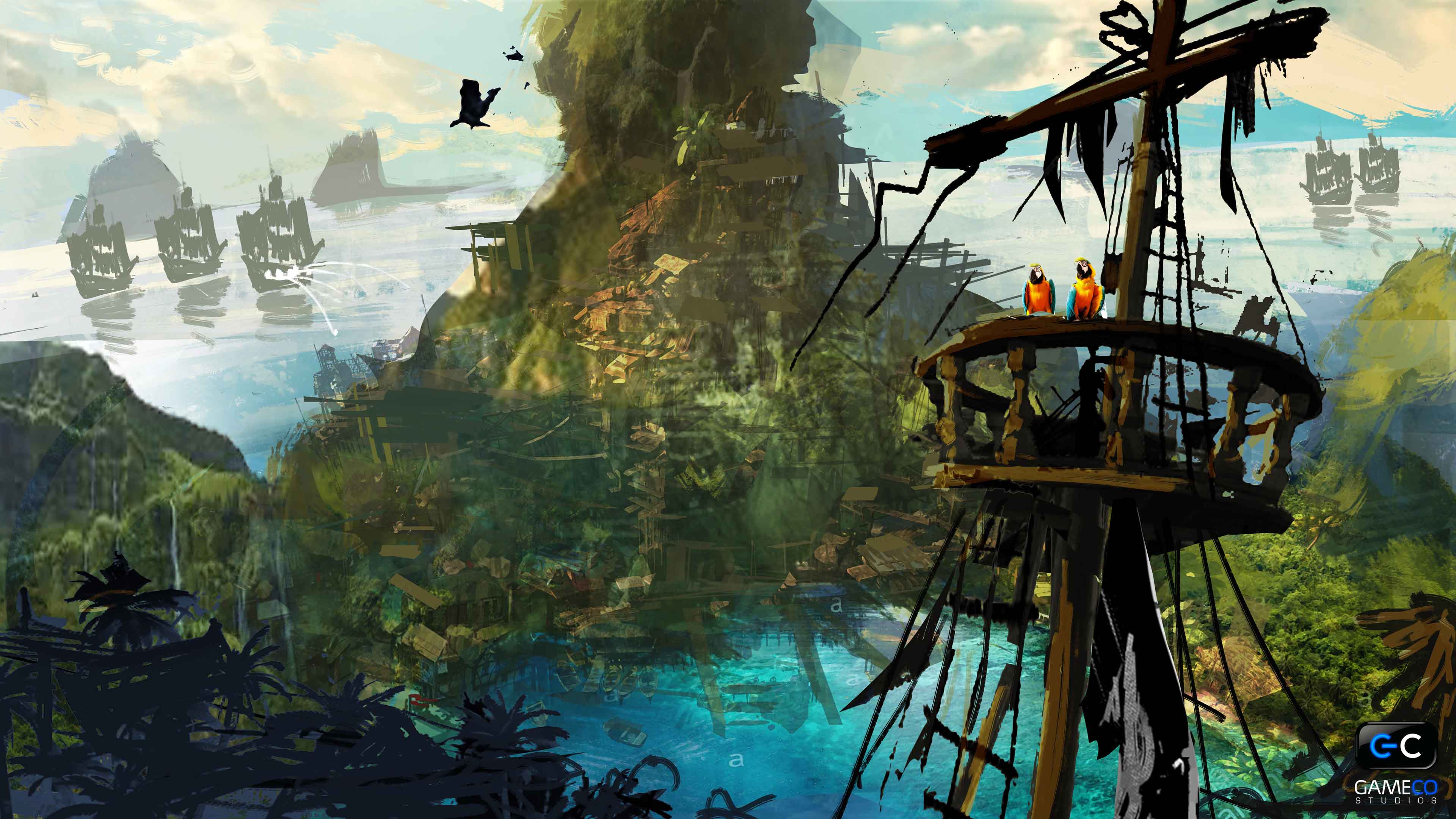
We decided on a composition, so let’s get straight into photobashing and overpainting.
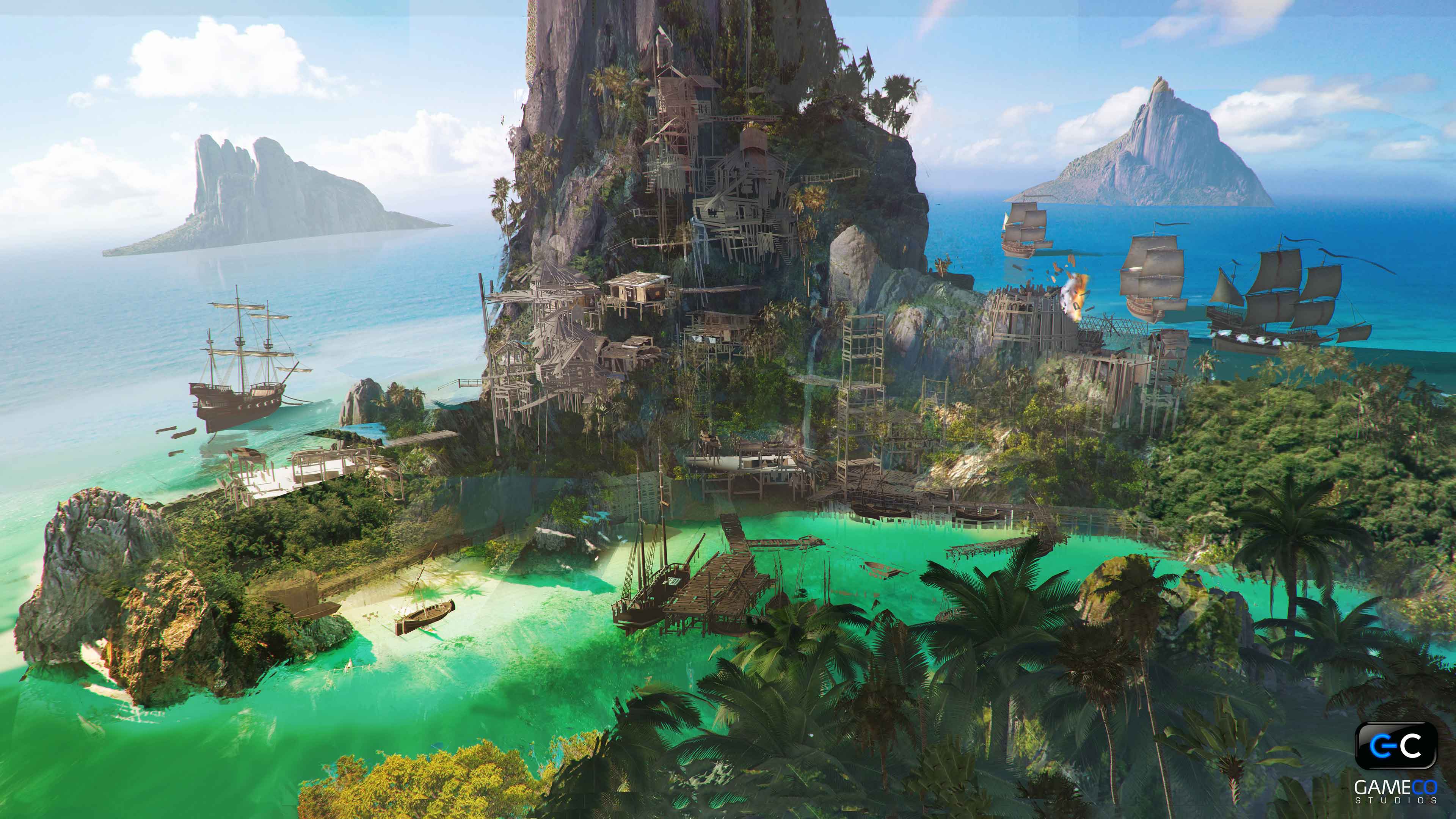
The first 3D elements have been added to the scene. Most of the elements shown here also made it into the final artwork.
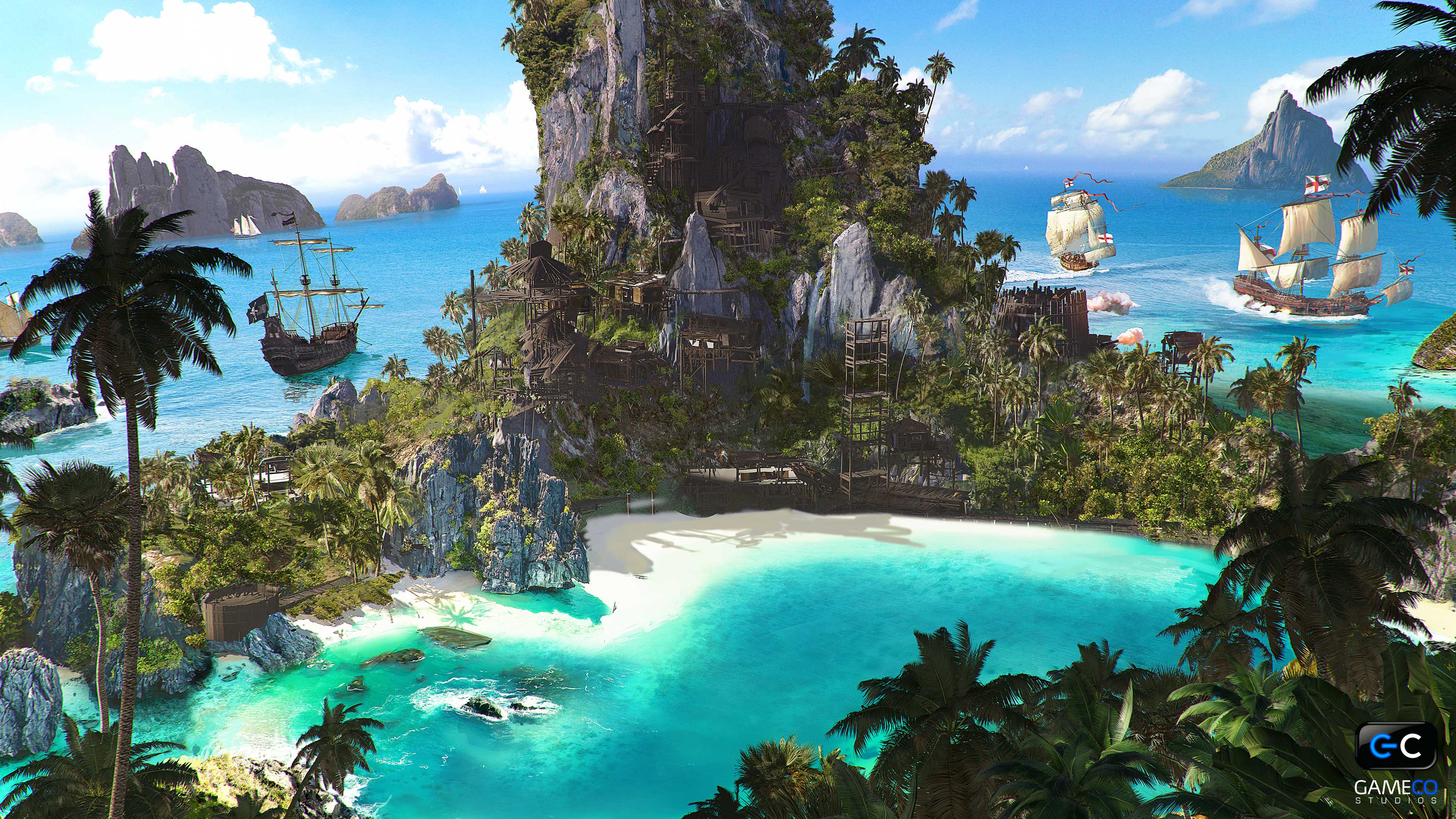
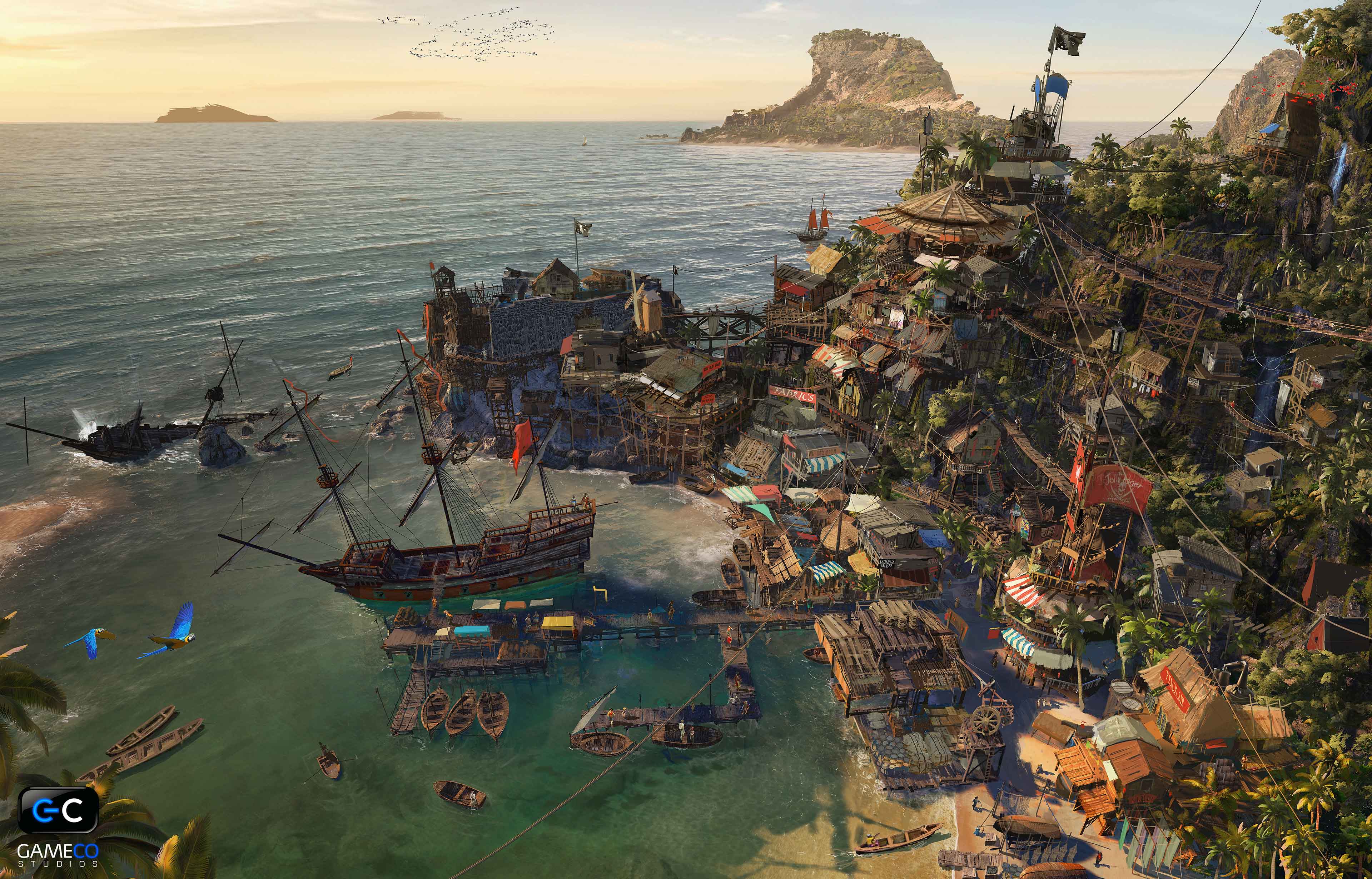
Below is the final image. I did a lot of overpainting to bring back the illustrative character and tie the elements together. What makes this artwork special is the center: an unstable, vertical wooden scaffolding on which all the buildings rest. It’s simply something new in itself.
It’s important to me to create eye-catchers. I don’t like to do off-the-shelf work.
Another detail pass. As it was a key visual, it was important to me to achieve a high degree of realism. So I made extensive use of photo archives.
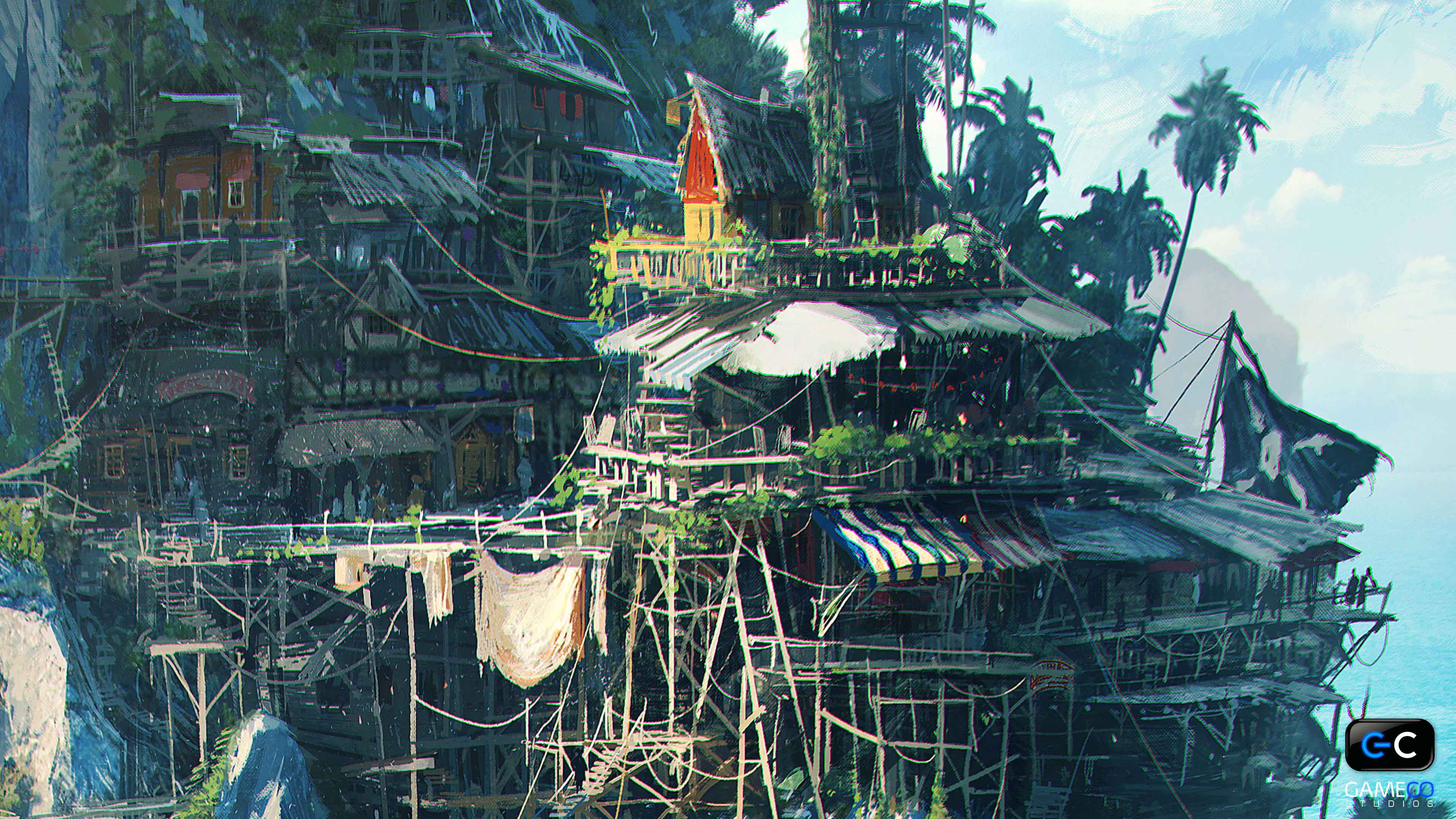
Above: Zooming in a bit: partly half-timbered, partly adventurous scaffolding structures, with sailing elements here and there. Stairs, ladders, shade.
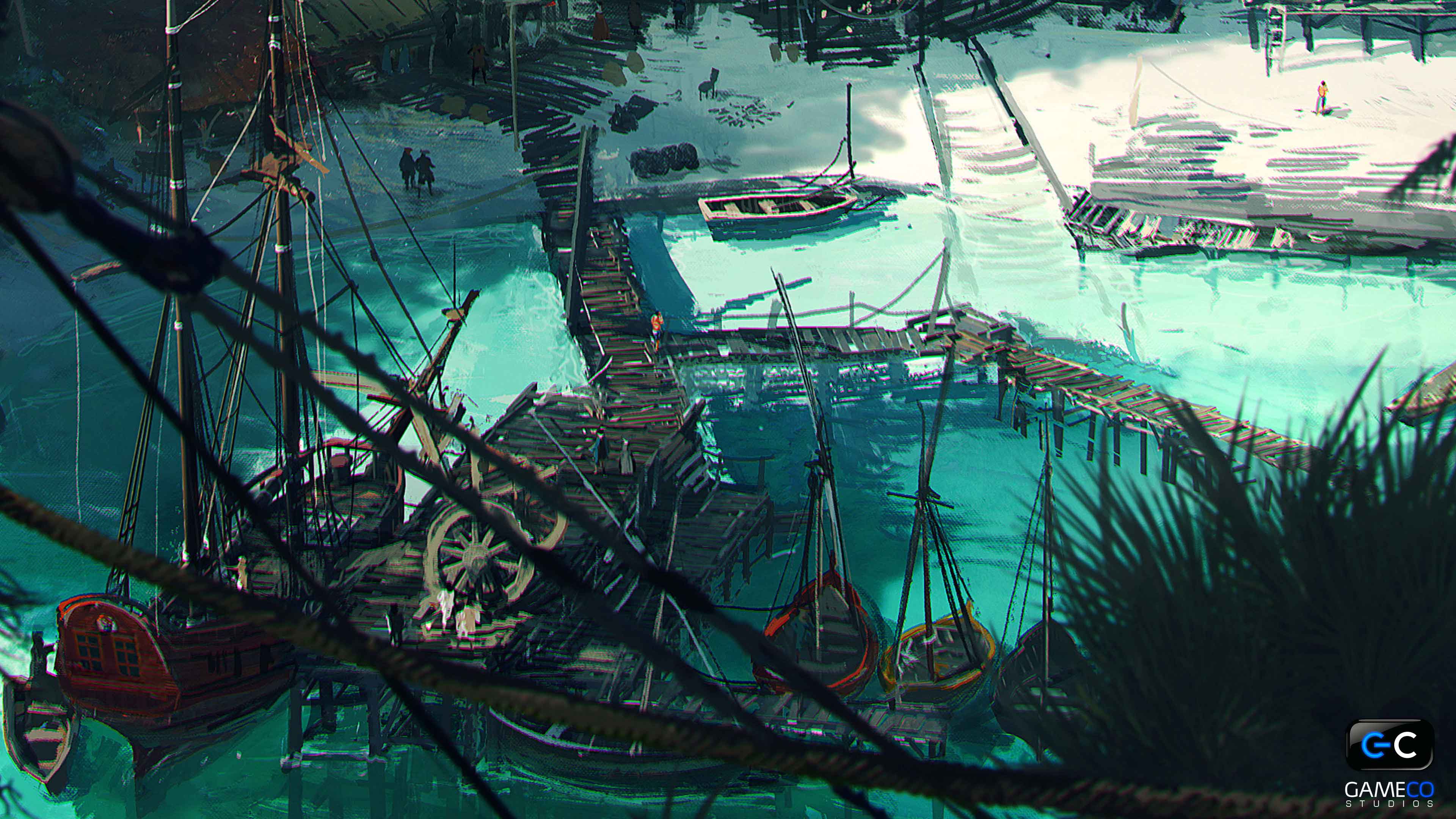
Above: The shallow-water harbor with rickety planks, fishing boats, wrecks in need of repair, captured ships, and a crane for loading and unloading. Just the bare minimum needed to properly maintain the ships. But: all set against a picturesque Caribbean backdrop with crystal-clear water.
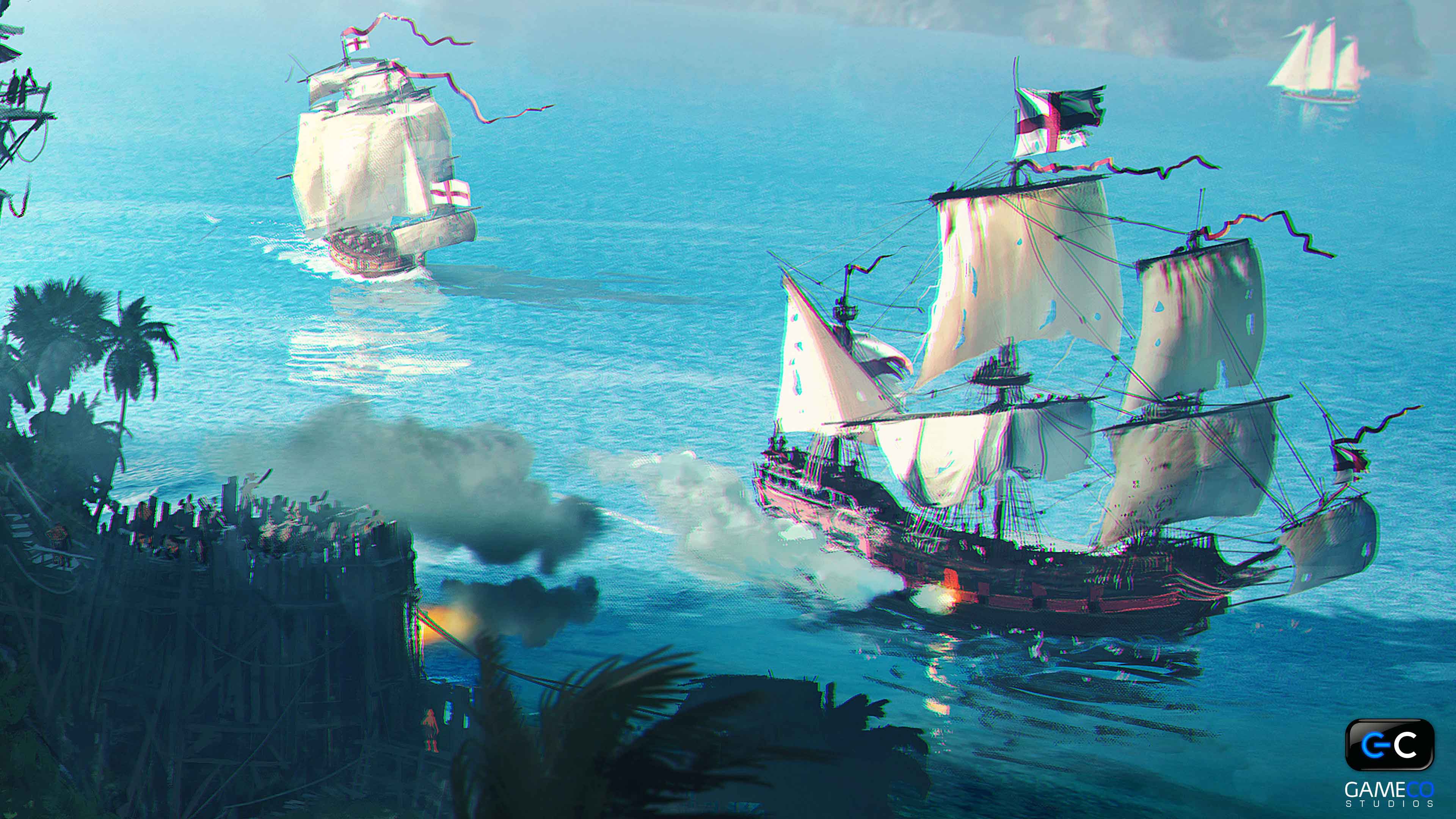
Above: Alarm! Everyone to the bastions! An English flotilla is paying a visit to our pirate hideout. It was worth the effort to haul those heavy cannons up the mountain…
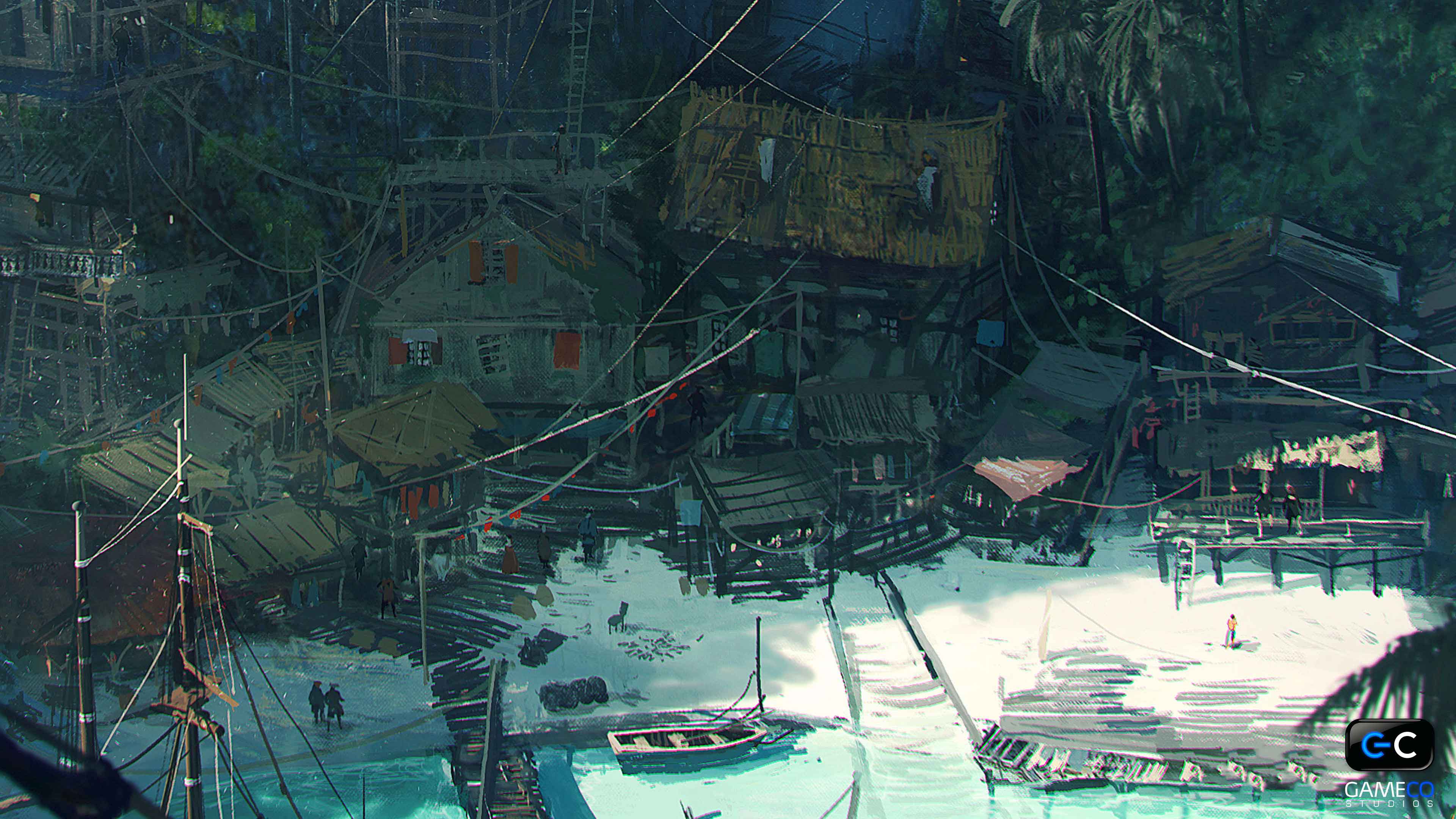
Above: Who wouldn’t love to take a stroll along this beautiful beach? Fancy a little rum at Shelly’s Bar?
Worldbuilding Through Play
Before I started working on the key artwork, I first had to figure out what such an island might actually look like. It was like playing with Playmobil. Using a simple set of wooden pieces, I put together a small diorama.
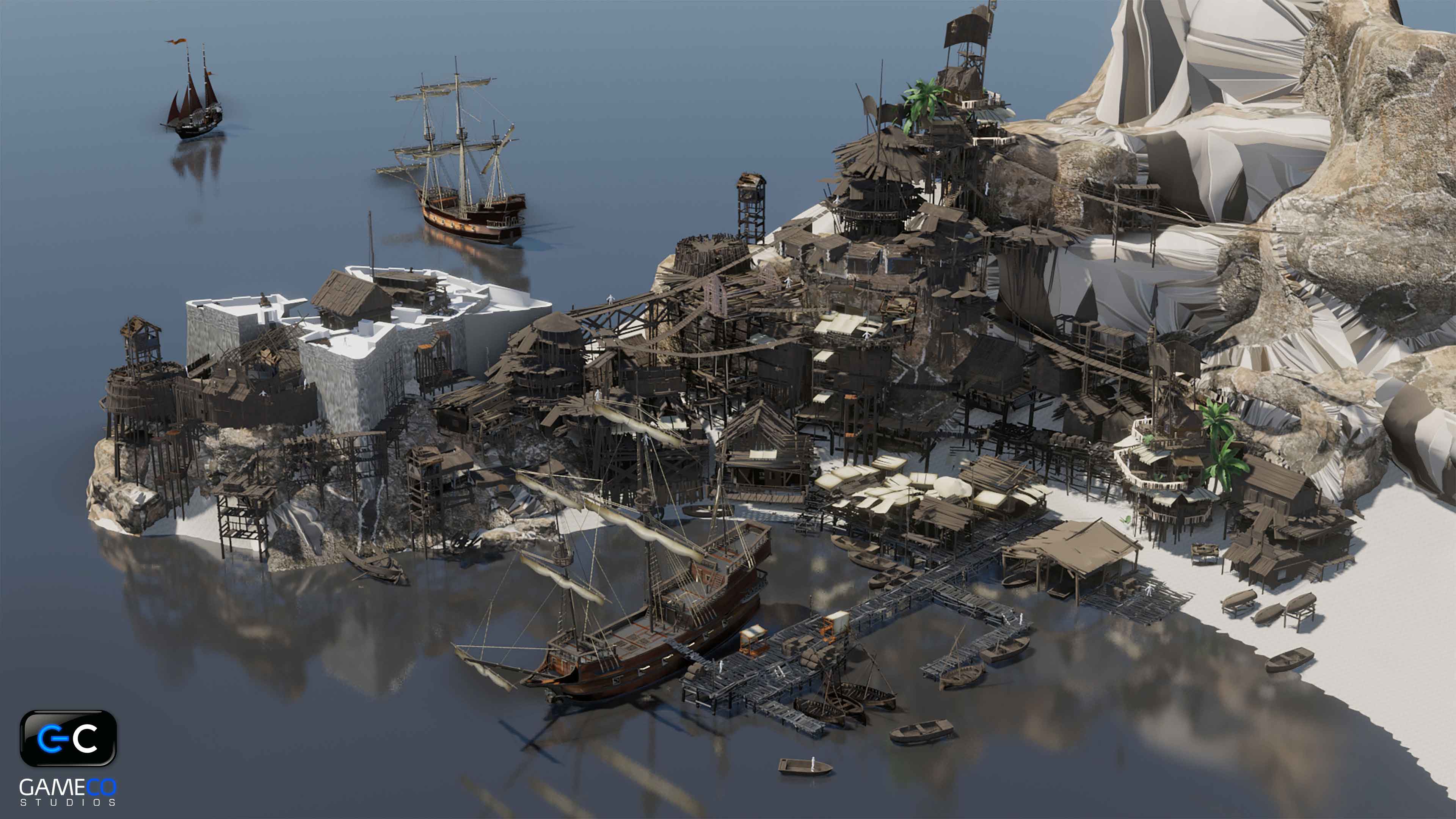
Below: Today I’m annoyed by the camera angle I chose, but oh well, that’s just how it turned out.
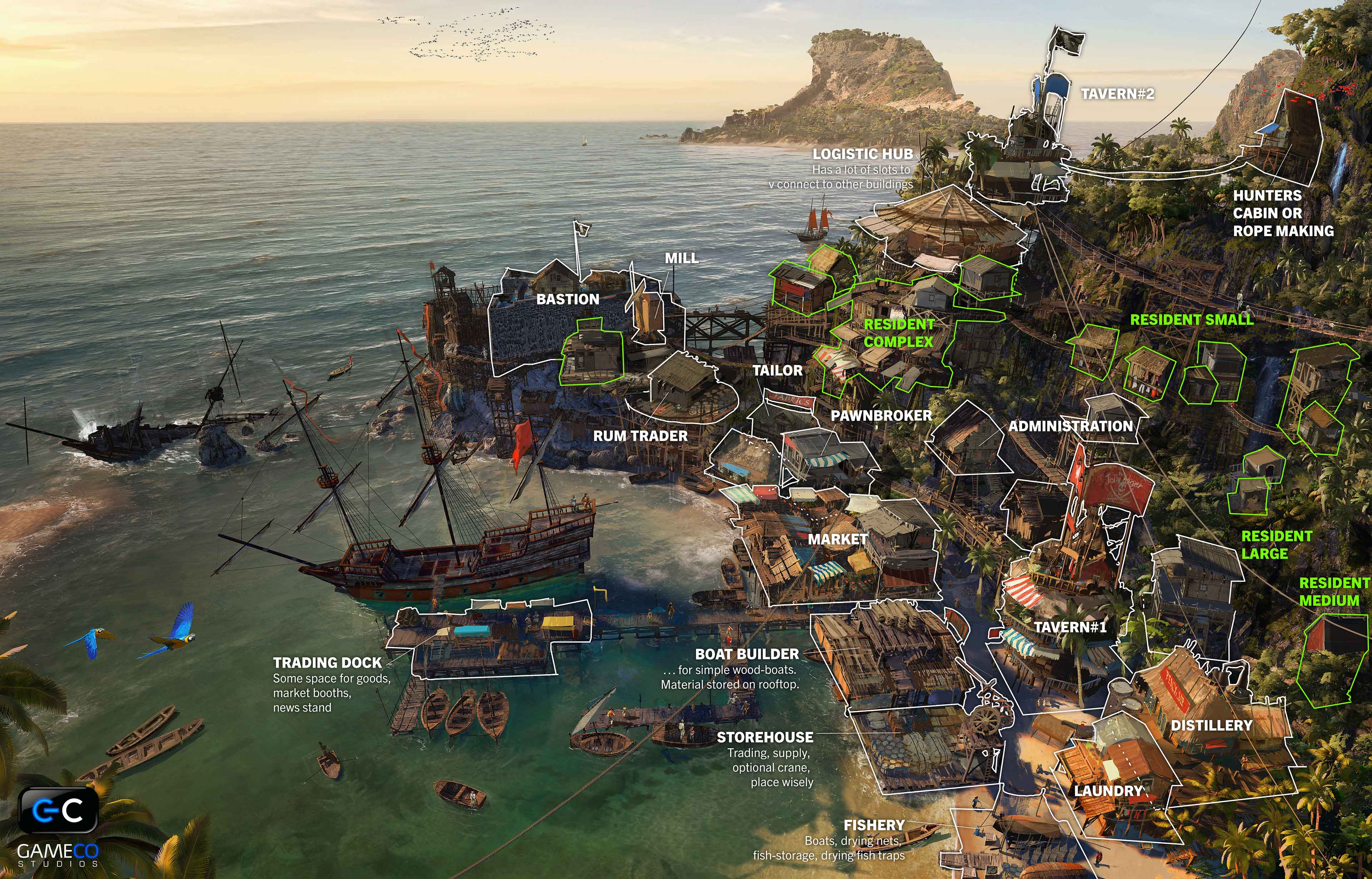
After all the elements were aligned, I realized they were hard to tell apart. When everything is made of wood, it’s hard to distinguish things. So I tried to work with shape language. Residents have little houses, taverns as central hubs have tall masts and flags, and functions for buildings (e.g. Distillery, Laundry, Fishery) are visible from afar, a lesson learned from, for example, the Anno series.
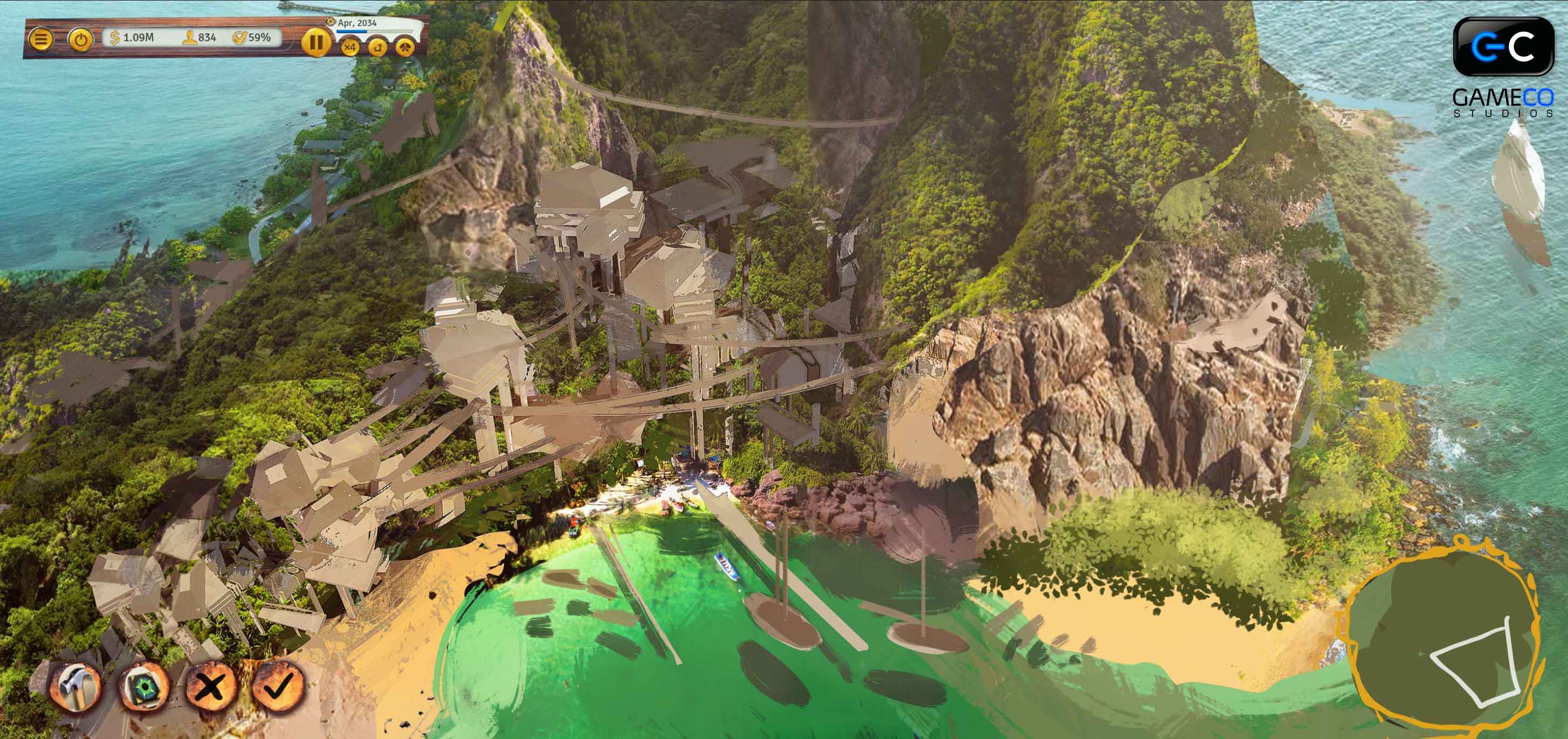
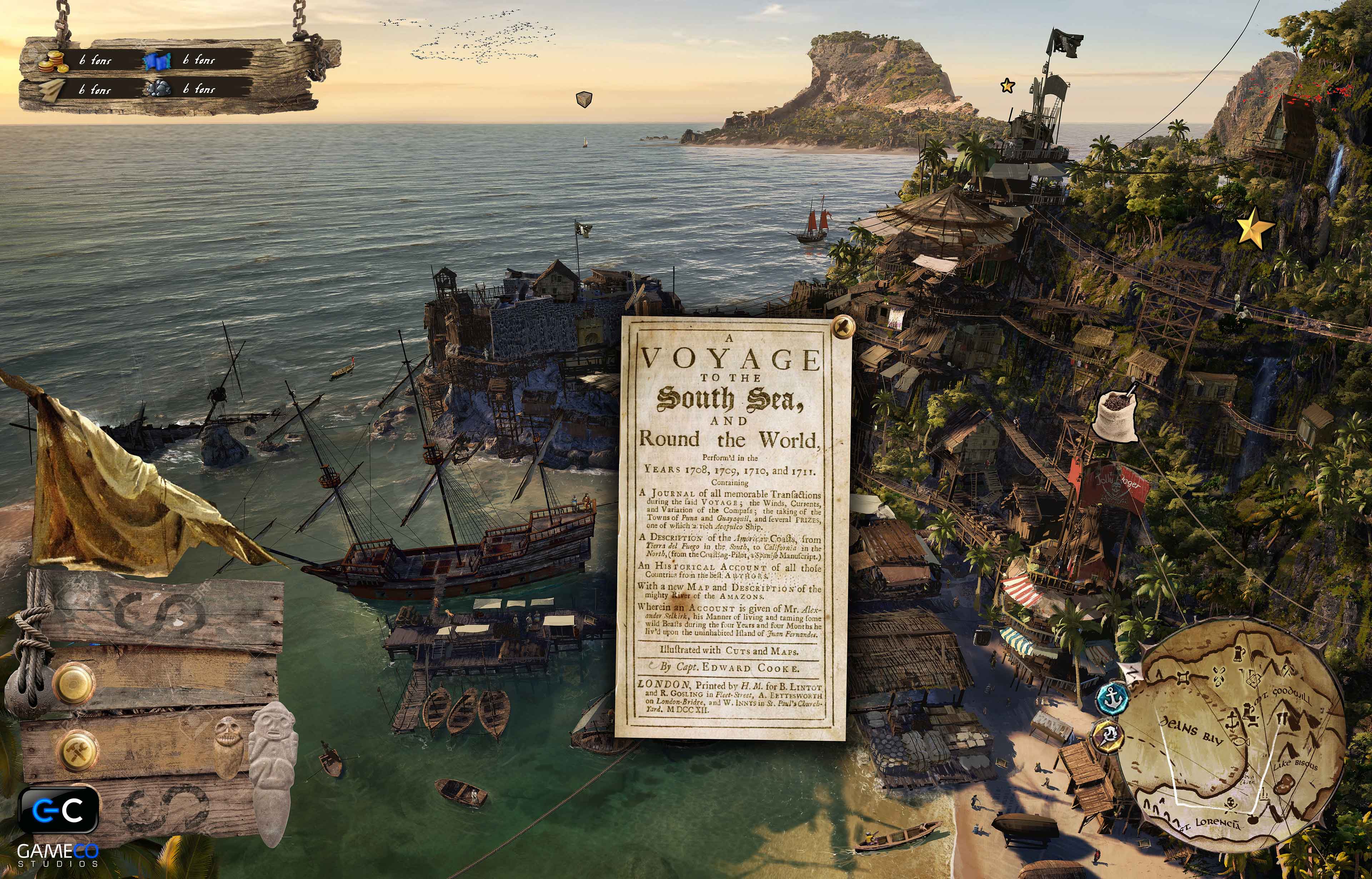
Below: I also took a quick detour into UI. But that was not really my forte. This design is very thematical/historical and has little to do with cross-platform controls or the requirements of today’s games.
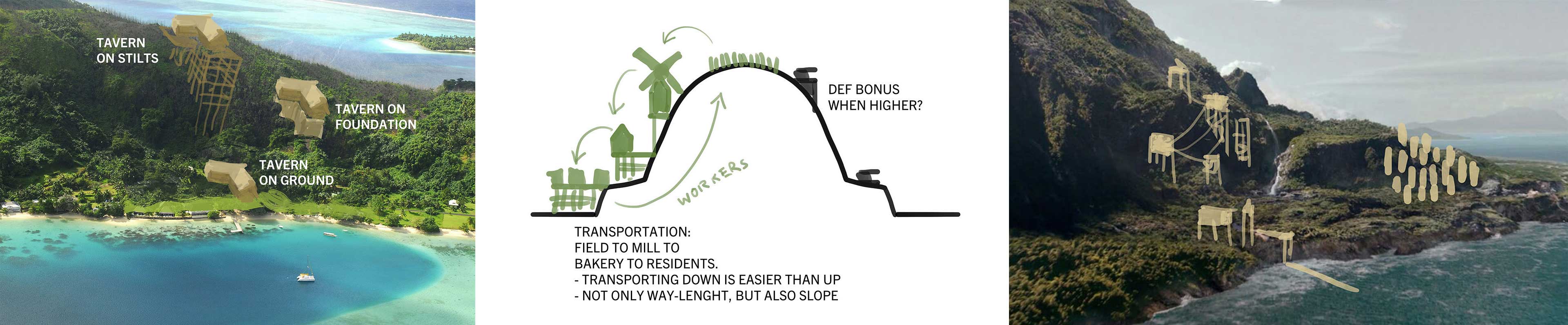
Below: As I mentioned earlier, I’ve consistently incorporated my thoughts and ideas on gameplay mechanics into the design. Coming up with rules for these mechanics not only helps create a believable concept, but also gives you a much clearer understanding of what you’re doing.
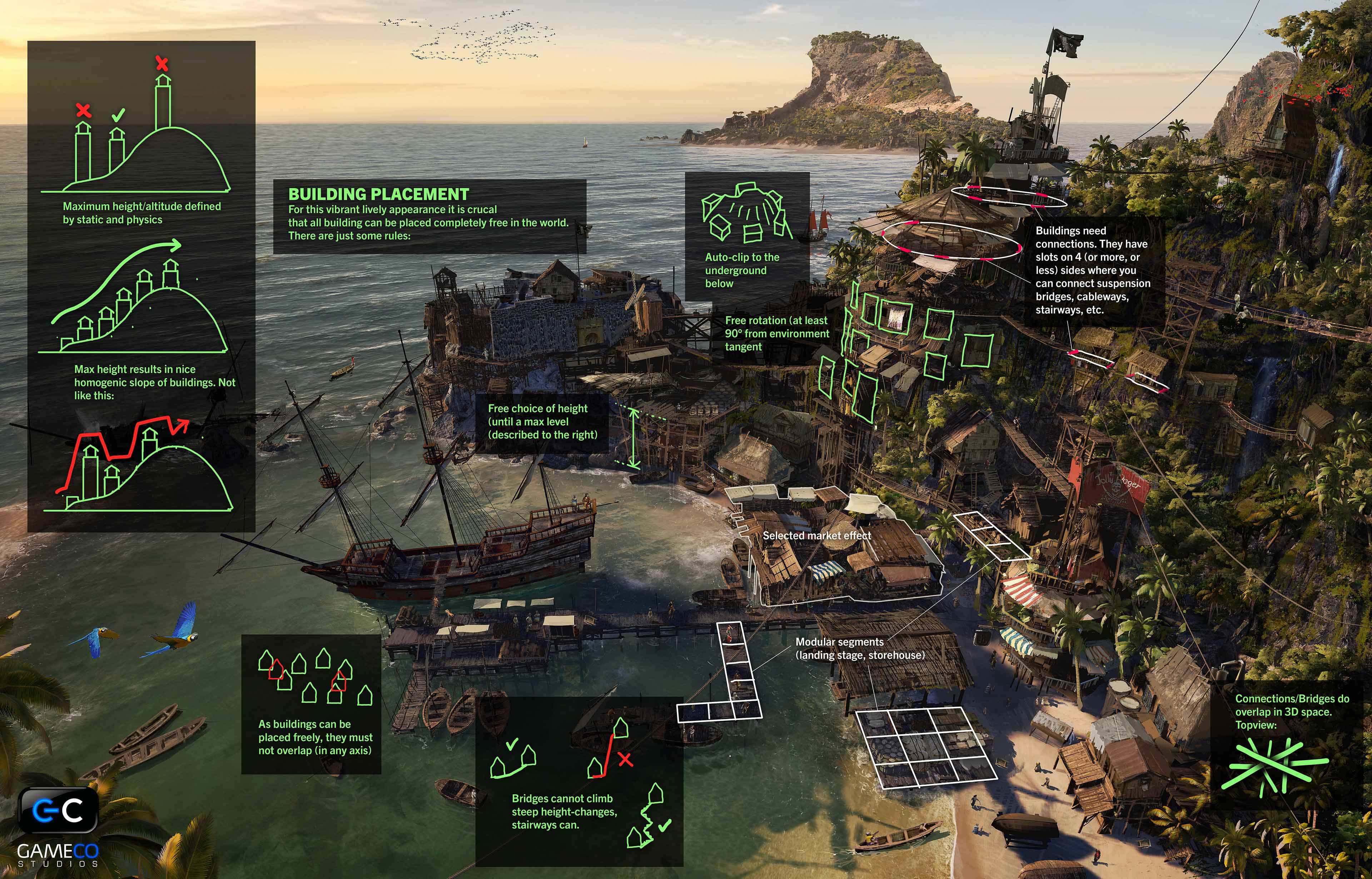
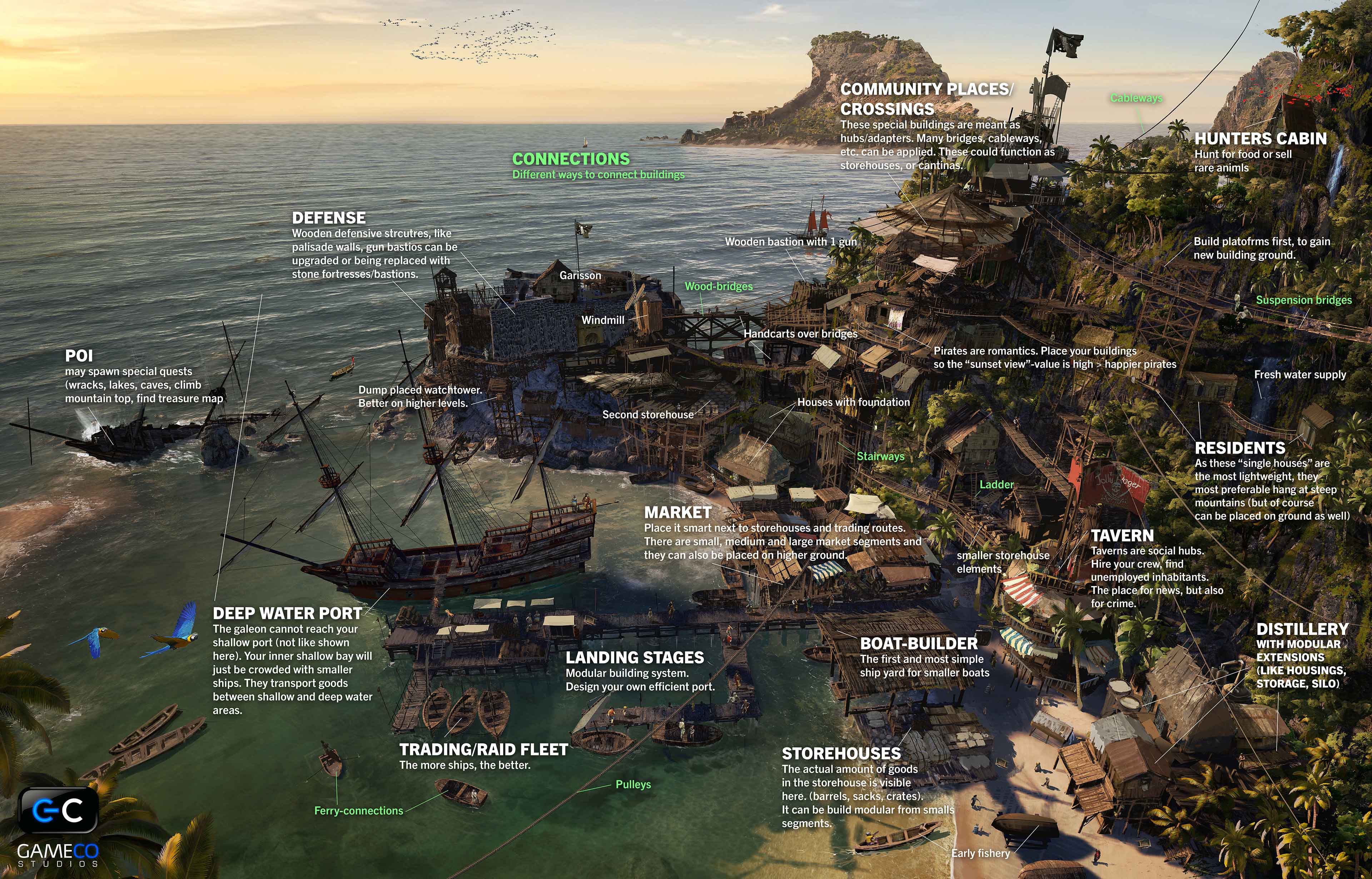
Explanations to the final artwork.
Below: the final image with lots of overpainting. It might look a bit stylized, but I wanted it to be colorful.
Pirate Engineering
Before we created the key art or the island concept, we developed the architectural style. There are already plenty of city-building games out there, but I don’t think anyone has seen anything this wacky before, at least not in 2020.
I imagined the slightly tipsy pirates as capable sailors, but not necessarily as great builders. Maybe they’re missing tools or nails, so they just tie everything together with ropes. You see elements of ships everywhere. Sails are repurposed as awnings, and ship’s lanterns light up the bar, as the Caribbean sun sets quickly.
Creating this concept was so. much. fun. Believe me.
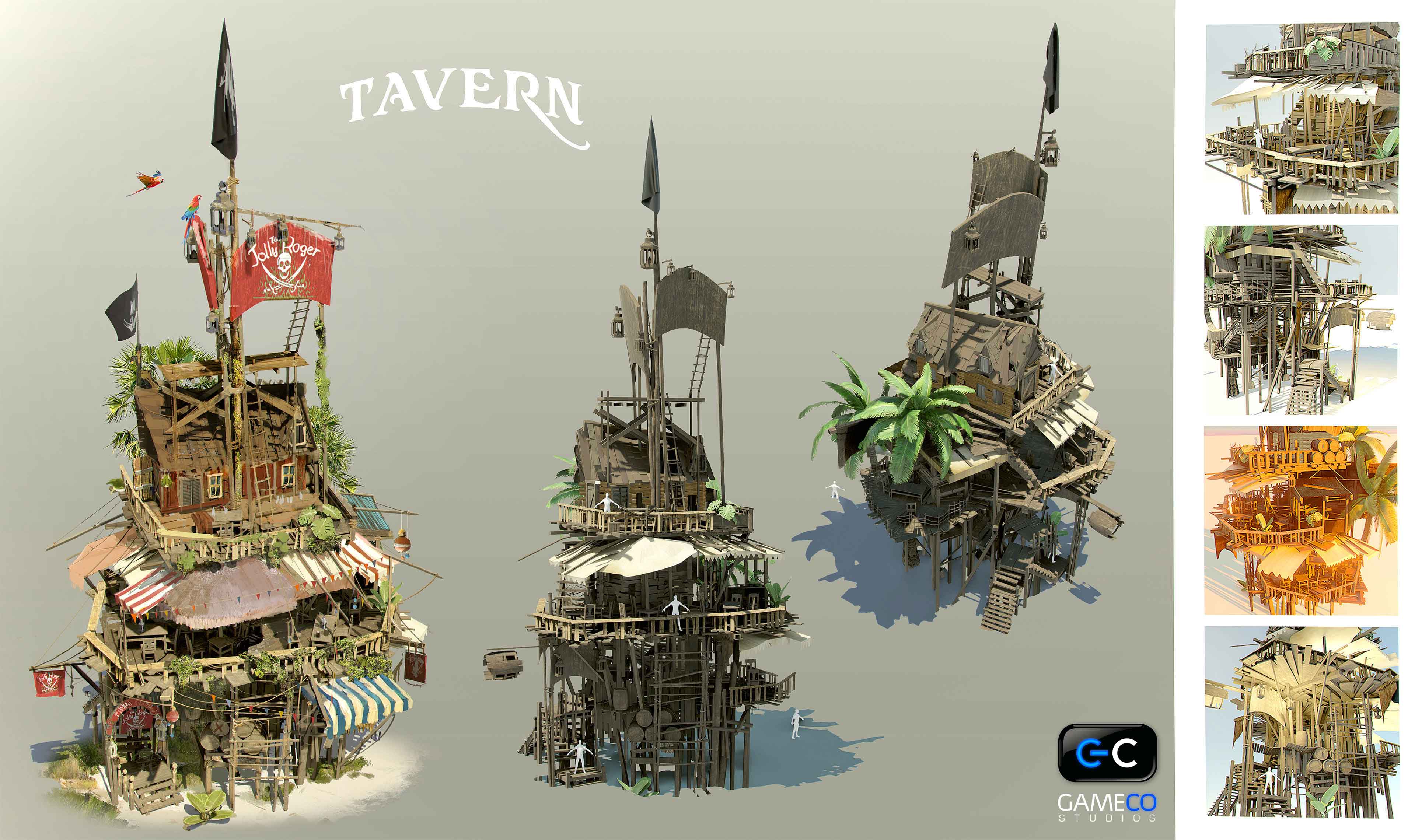
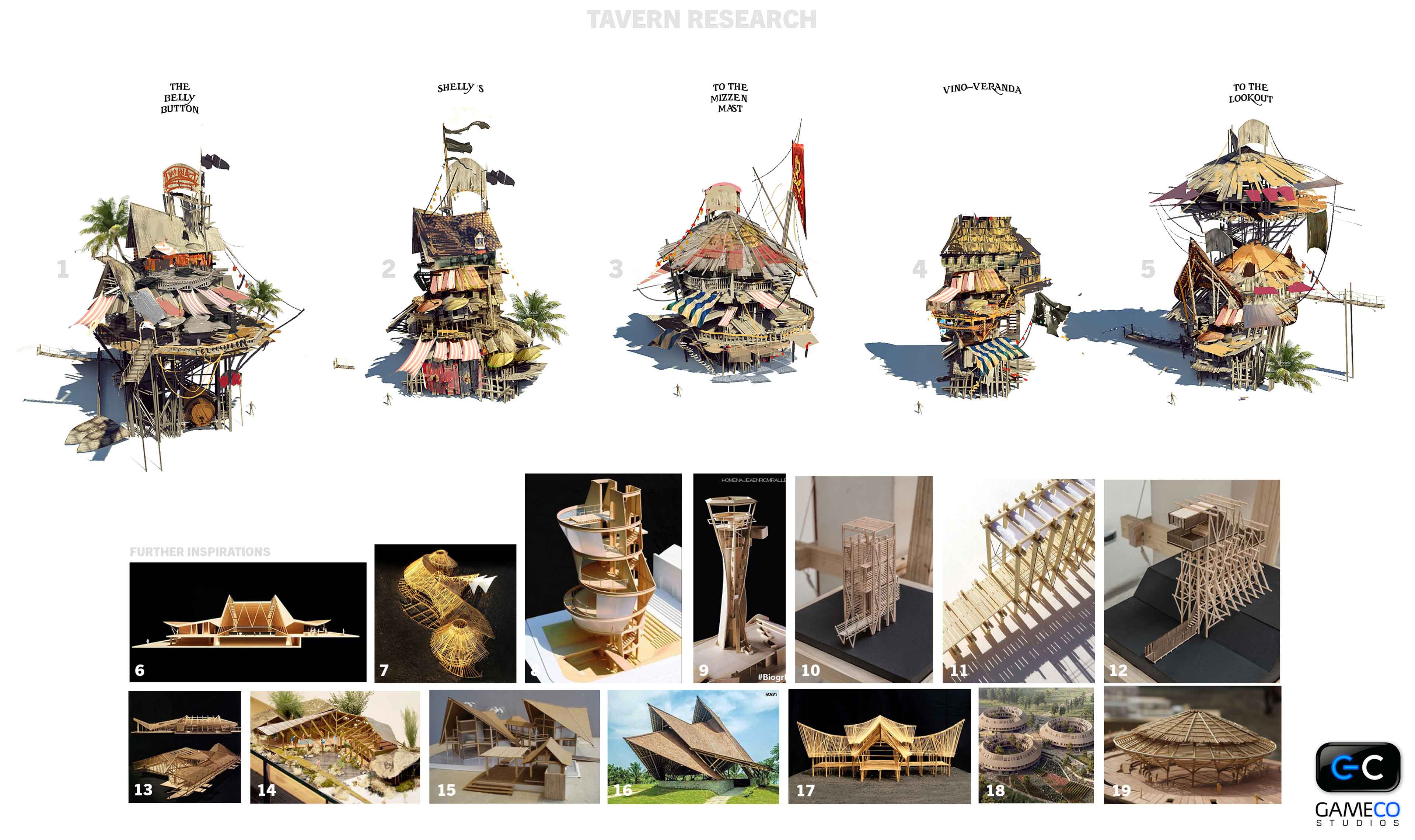
Below: I started by photobashing and overpainting these pubs. Initial references seen below. Something that went down really well: give the taverns names! ‘The Belly Button’ just adds so much more to the story.
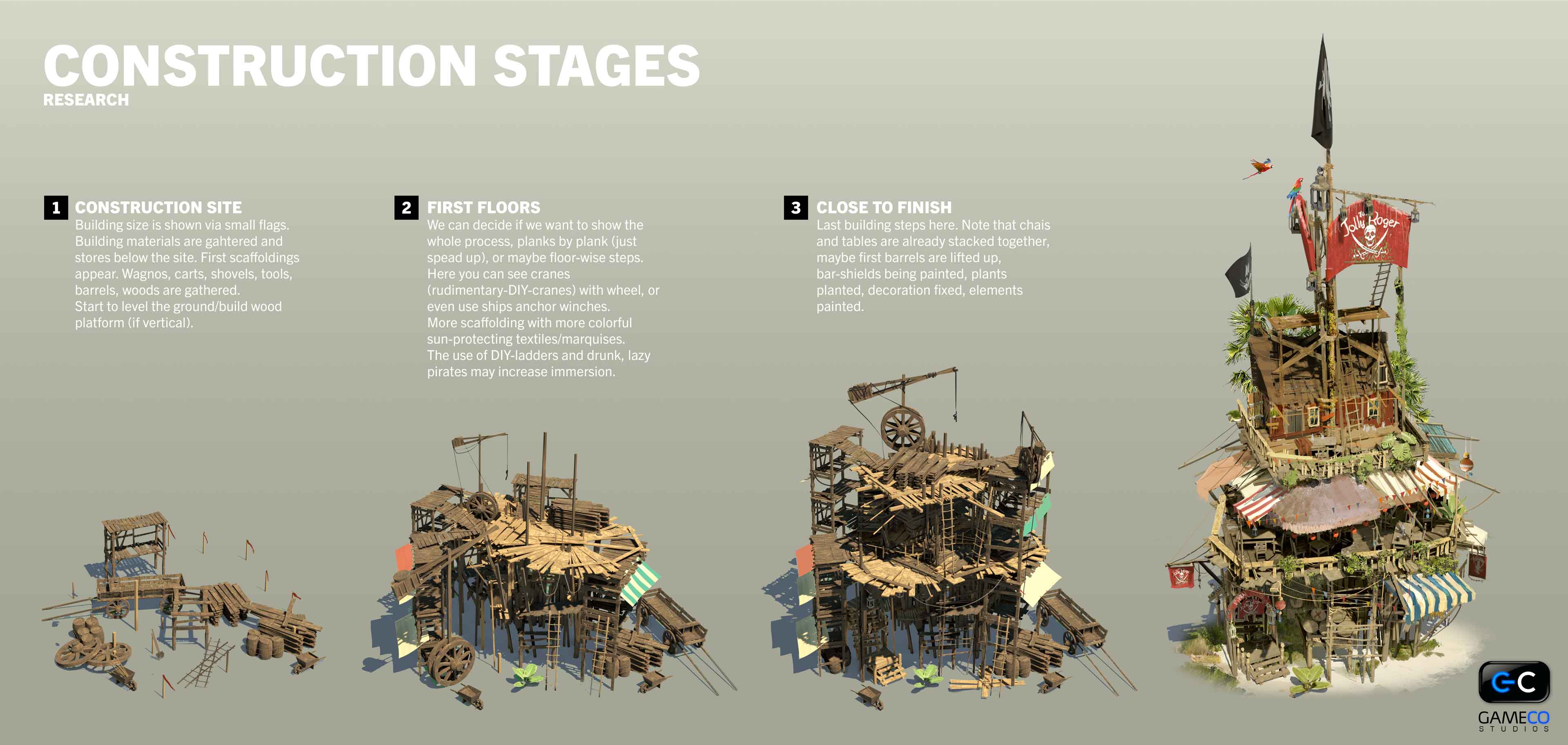
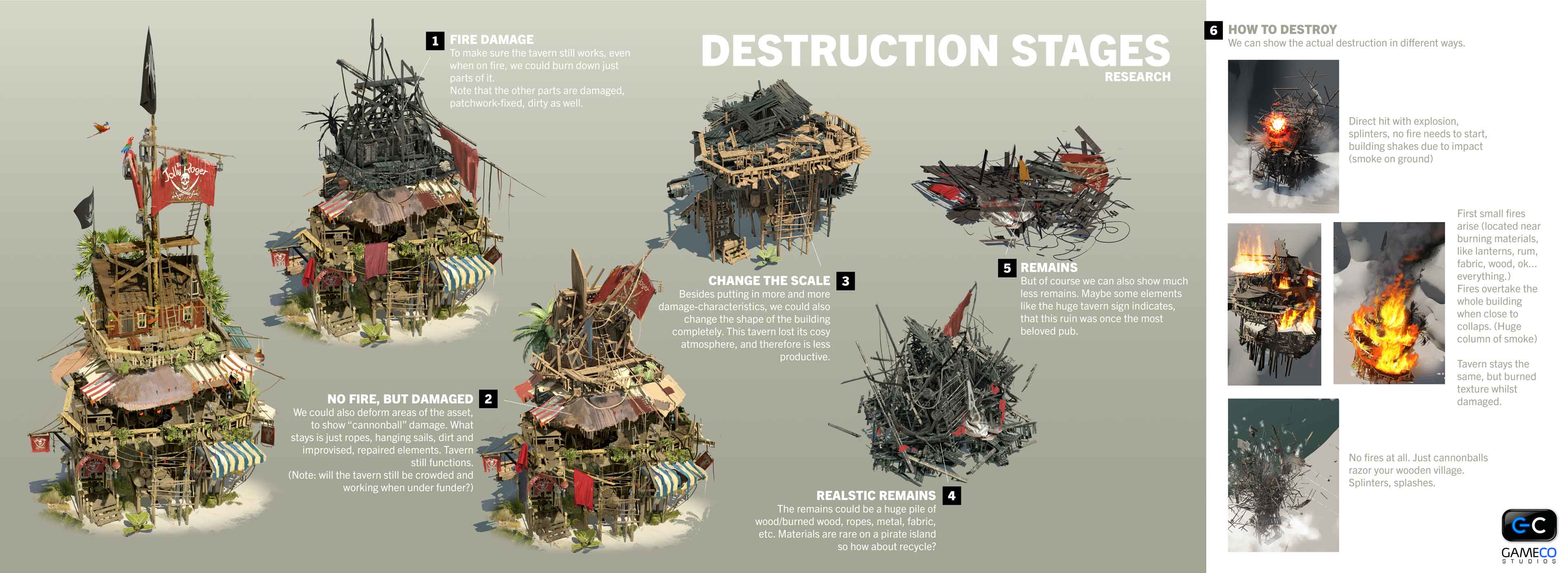
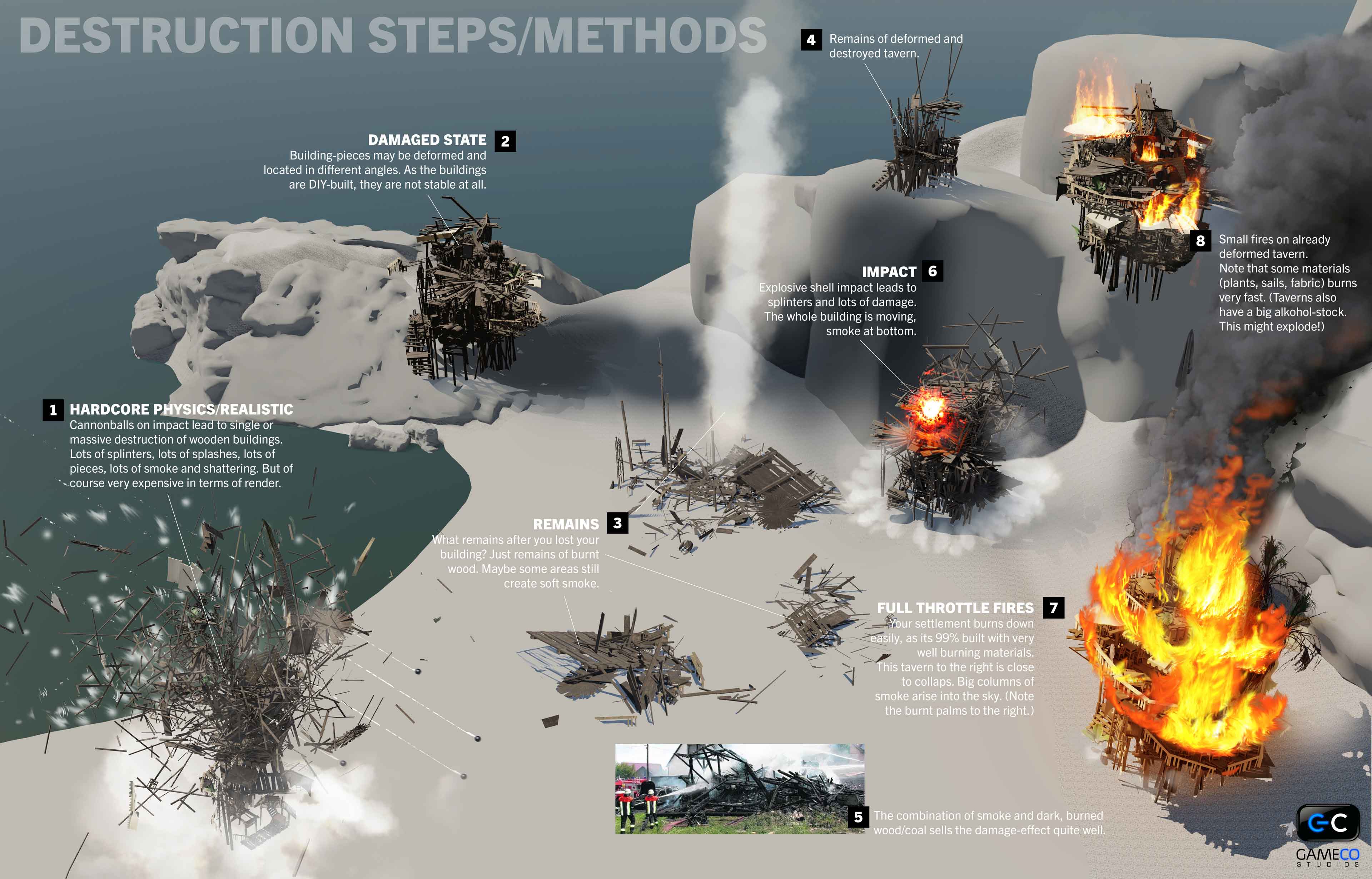
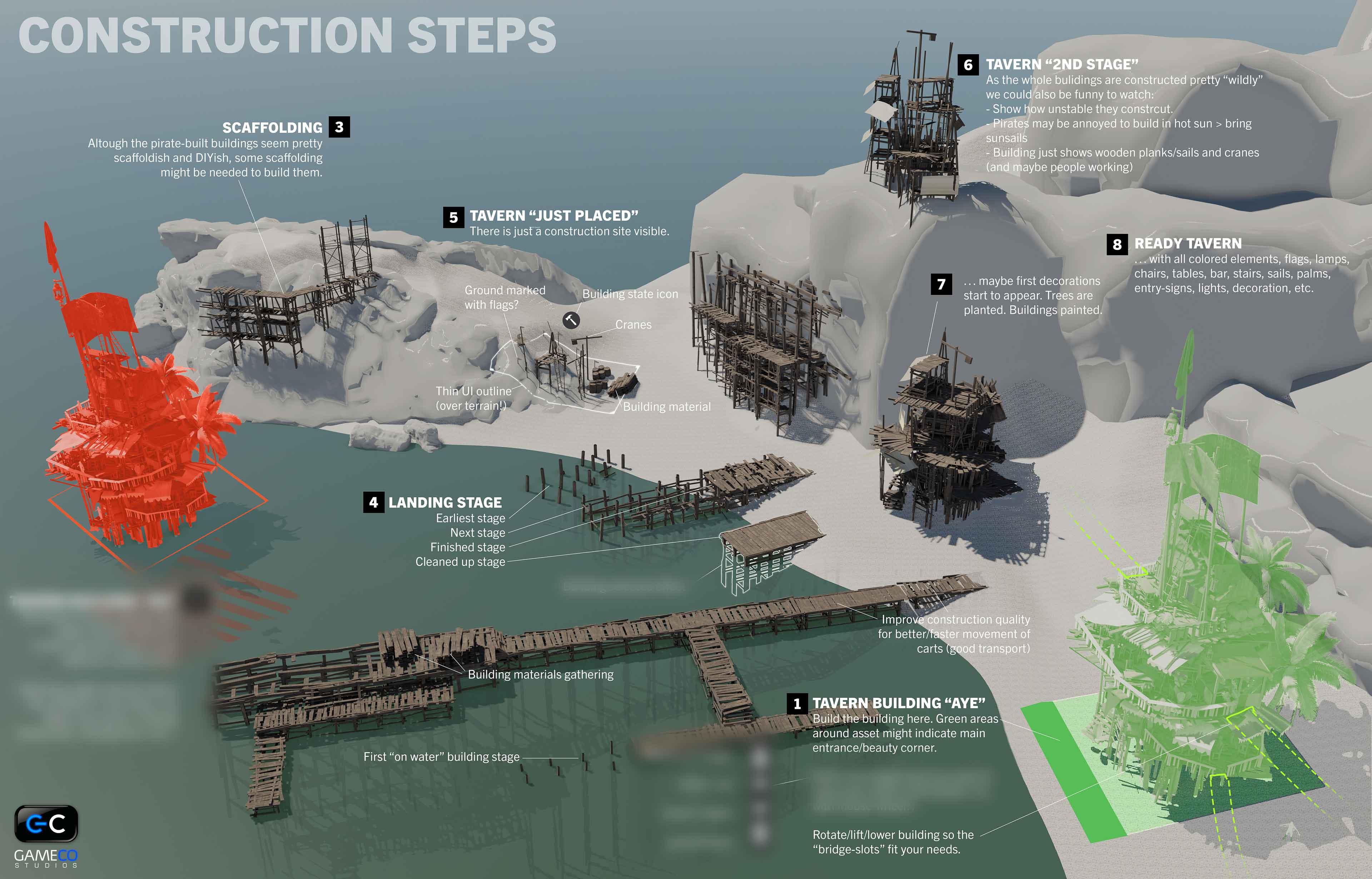
Below: Once we’d roughly established the style, the aim was to show both construction and destruction stages. In the course of the game, this is naturally quite technical, and you always have to keep an eye on the time involved and the actual impact.
Mood and Weather Passes
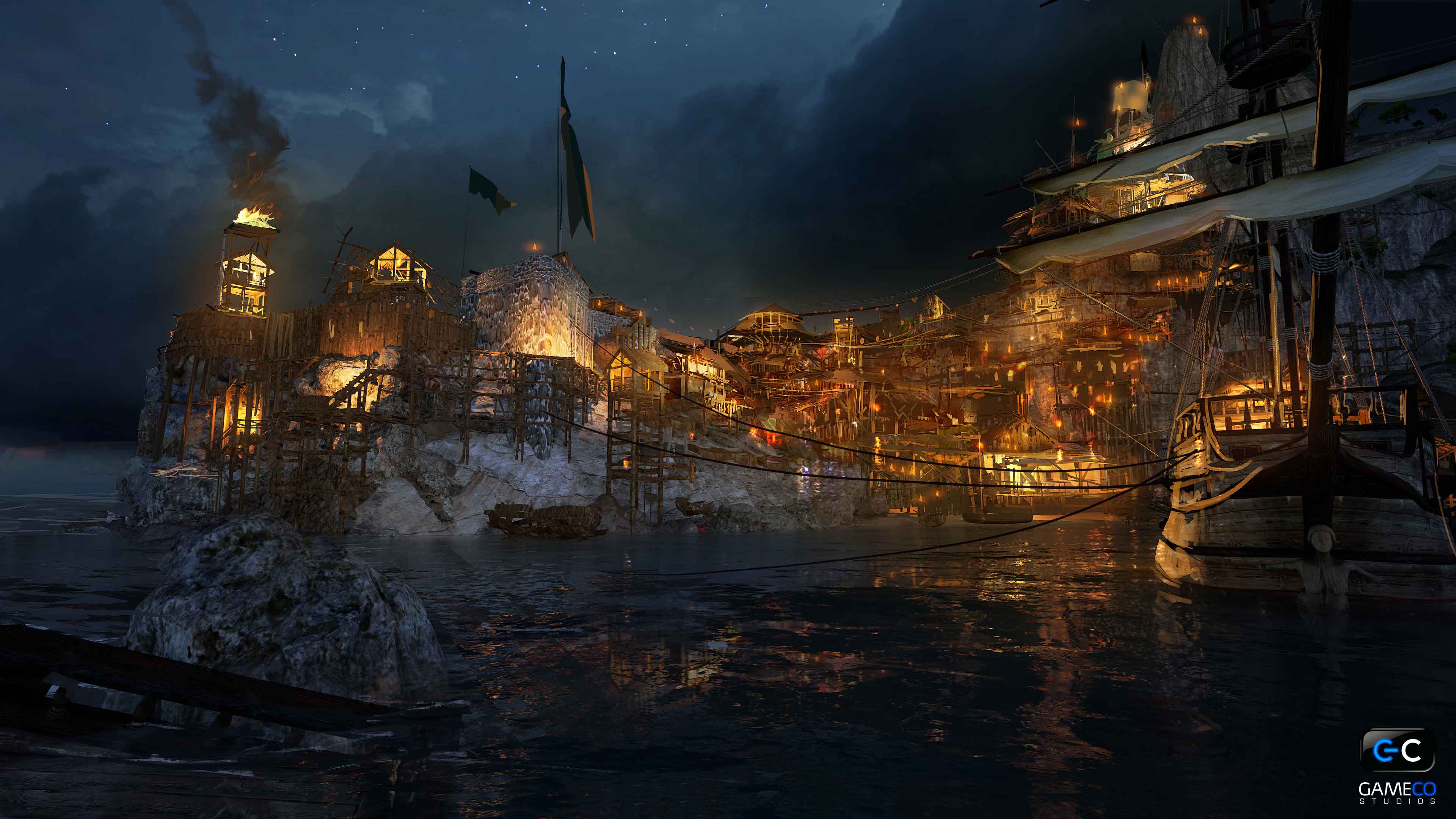
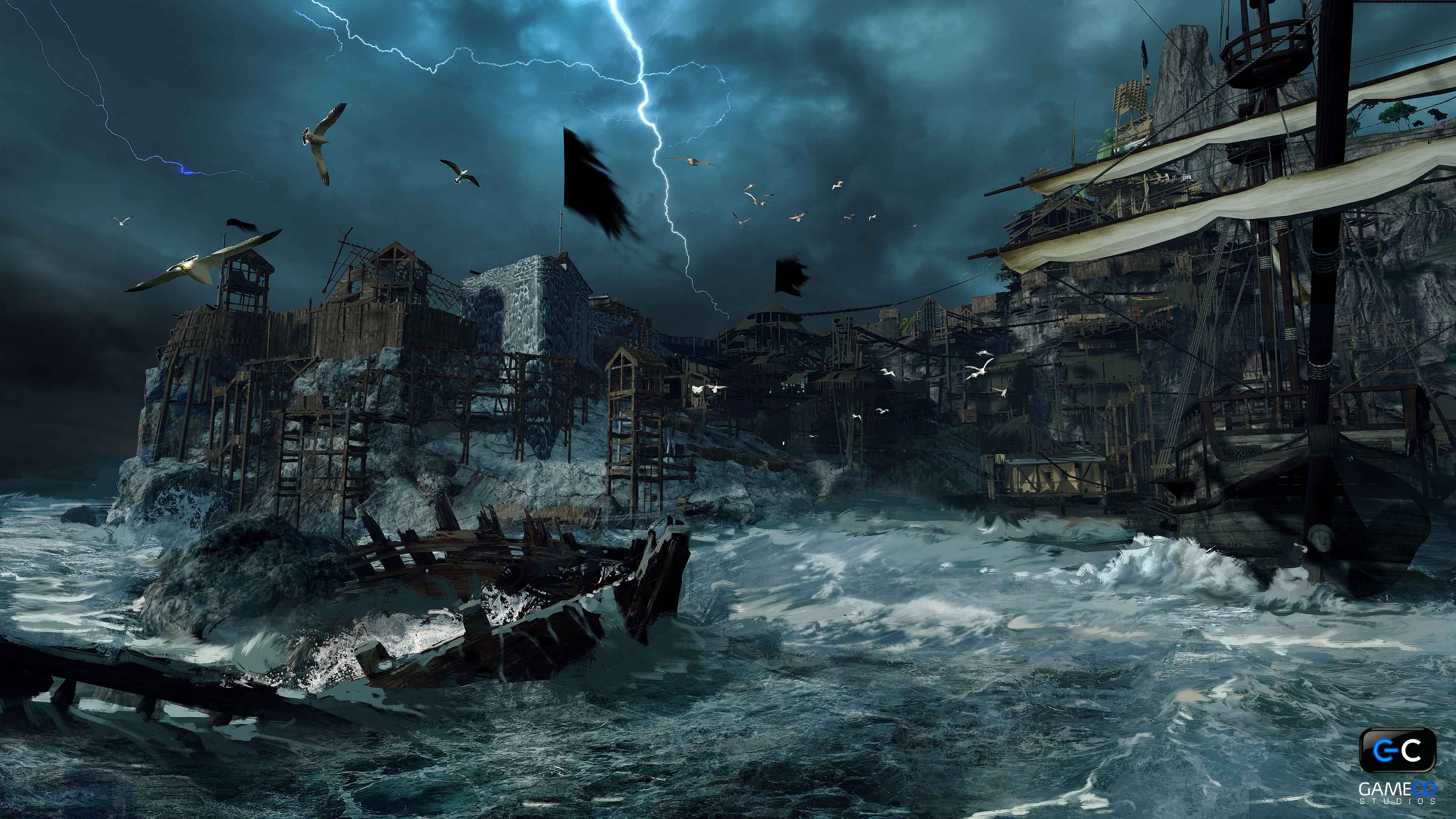
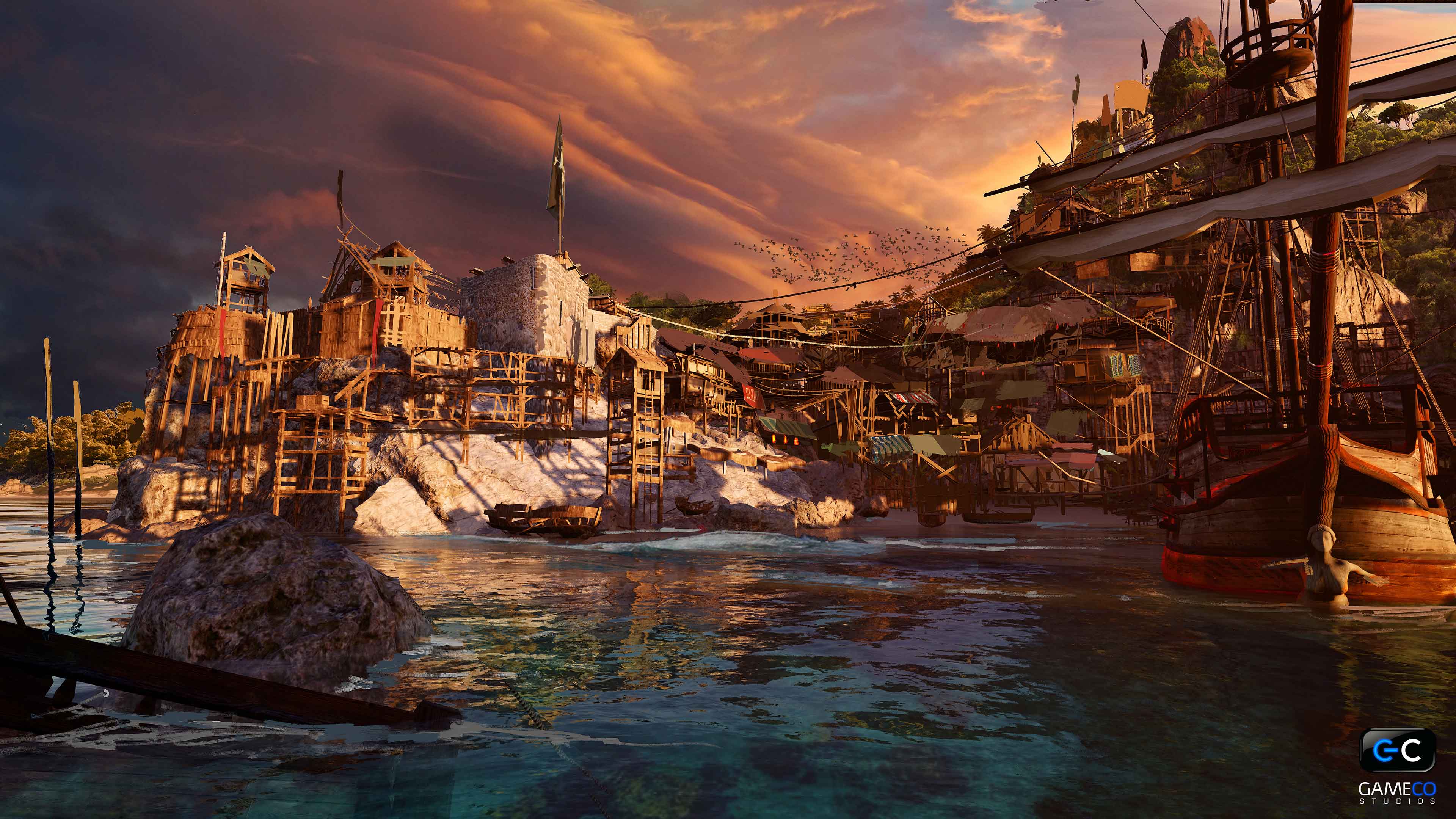
As the island scenery was already finished, it was easy to quickly test out different times of day and weather conditions. Unfortunately, the task was over a bit too quickly.
Ships of the Golden Age of Sail
I have a slight obsession with sailing ships and the Golden Age of Sail. Although this was mainly a city-building game, no pirate game is complete without ships. Luckily, I got another chance (after a cancelled pirate game in 2016) to put all that accumulated research to use and design a bunch of vessels.
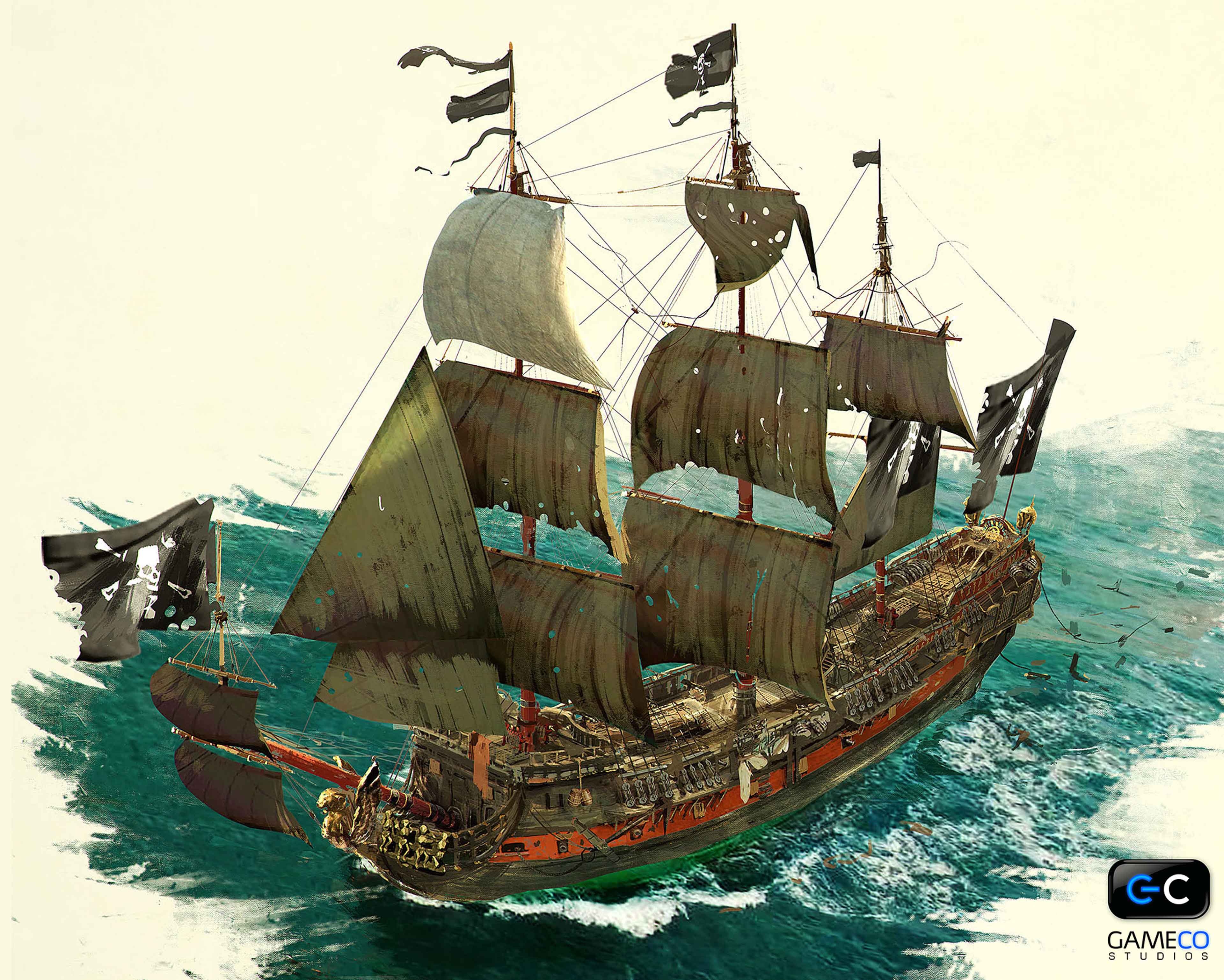
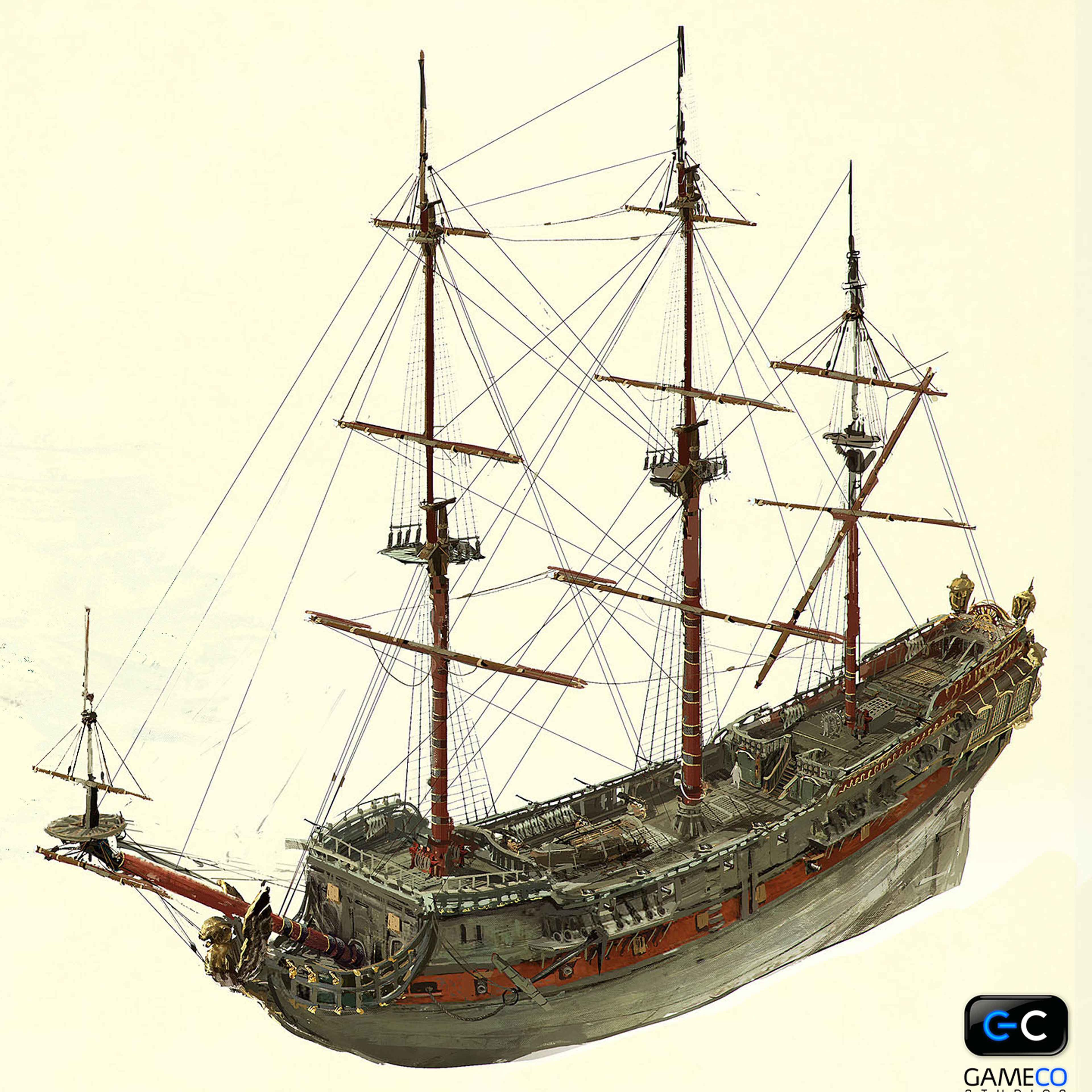
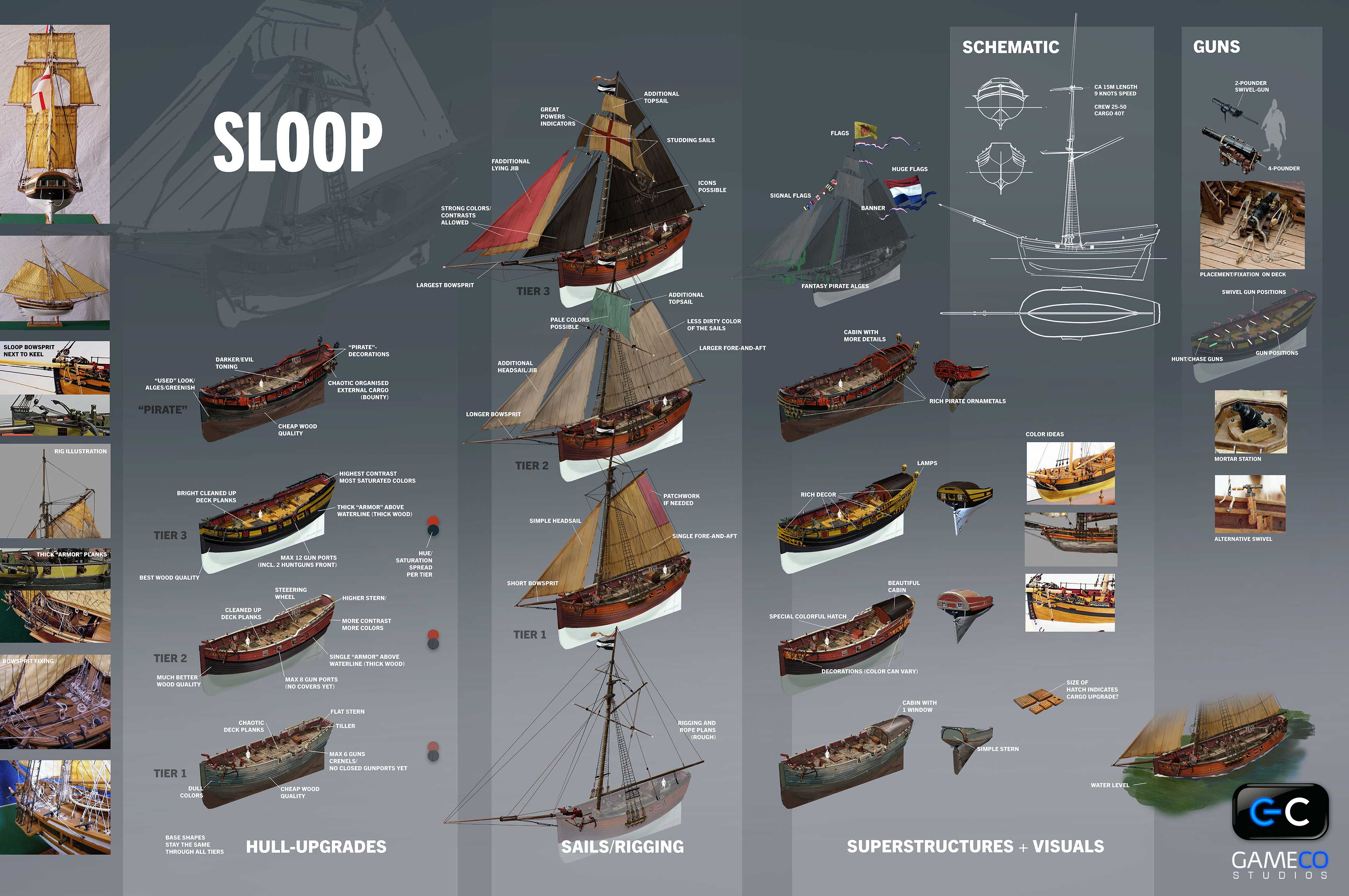
Below: I’ve tried to come up with distinctive ship types that are easy to recognise but still leave plenty of scope for an upgrade system. These are just ideas and suggestions; it’s completely unclear which, if any, will actually be implemented.
Incidentally, rowing boats were not included in the plans.
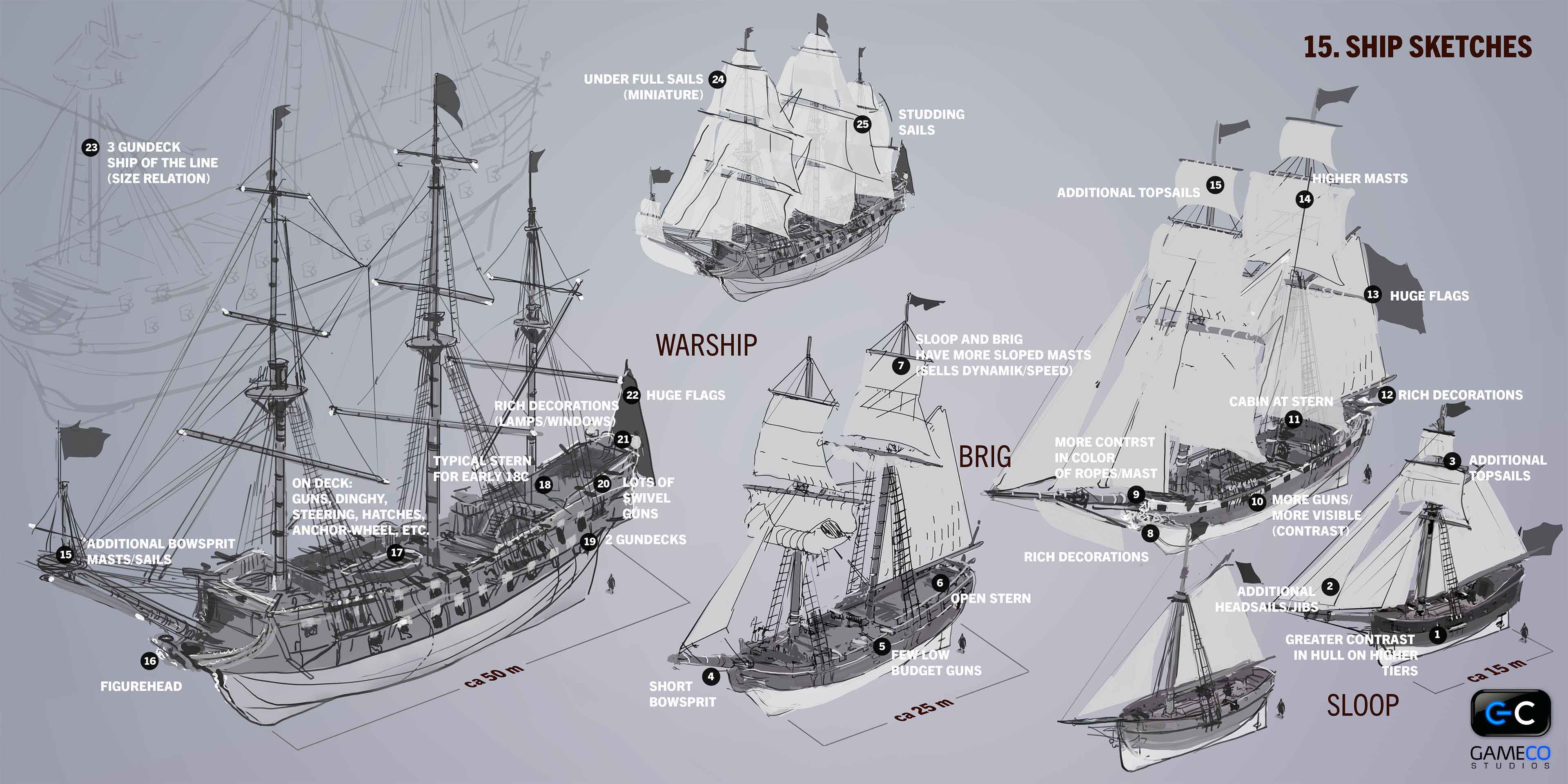
Below: Here is a very detailed look at the ideas for an upgrade system. At the time, we weren’t sure what level of simplification and stylisation was required, so we went for the safe option: a historical approach.